
Bird Song

I sometimes come across a book that I never want to end. Margaret Renkl’s The Comfort of Crows was that read for me. I crammed it into my overstuffed suitcase last month and took it on a three-week camping trip to Namibia, Africa, because I knew I would regret leaving it on my nightstand at home.
A good book marks time. I remember where I read it, how I felt, and what it cracked open inside me. Renkl’s book revolves around her appreciation for birds and bees and plants and wildlife in her own backyard. She doesn’t travel for her stories, but cultivates her stories through the creation of a pollinator garden. There are fifty-two essays in all, spanning an entire year, reflecting what comes with the change of season.
I limited myself to a chapter per night, reading it right before bed, and carried the hardback book with me on several work trips in early April. Reading about the bluebird nesting box helped settle my busy mind. Rodeo and I dreamed of returning to Namibia at the beginning of the dry season, a less touristy time of year, a different season, and we wanted to do it while the last trip was fresh (see The Waterholes of Etosha; and Saving the Cheetahs). With no vacation time, I applied for a reduced schedule for May and got it. It was a scramble to pull it all together at the last minute, so I leaned into Renkl’s book each night to escape like a kid into Neverland. Thanks to her seemingly effortless prose, I slept quite well each night.
These well-crafted stories reflect Renkl’s own relationship with the environment. The author lives with her husband near Nashville, Tennessee, and pens a weekly column for The New York Times. Each chapter is accompanied with a colorful work of art that her talented brother, Billy Renkl, created. His visual contribution makes the book even more of a treasure.
Her written word was like a tonic for me, it helped me breathe easier and slow down, preparing me, it seemed, for the trip to come. We would explore the Zambezi region, where three major rivers flow down from Angola and Zambia. Over four hundred species of birds feed off the bugs in these grasslands and the fish in the swollen river. I had my camera ready, my battery charged, two new sim cards in place, and a compact camera bag. I felt much better equipped on this second visit to Namibia. Little things like navigating the airport, finding the rental car counter, and driving on the opposite side of the road, seemed much easier this time. We even knew what grocery stores we preferred.
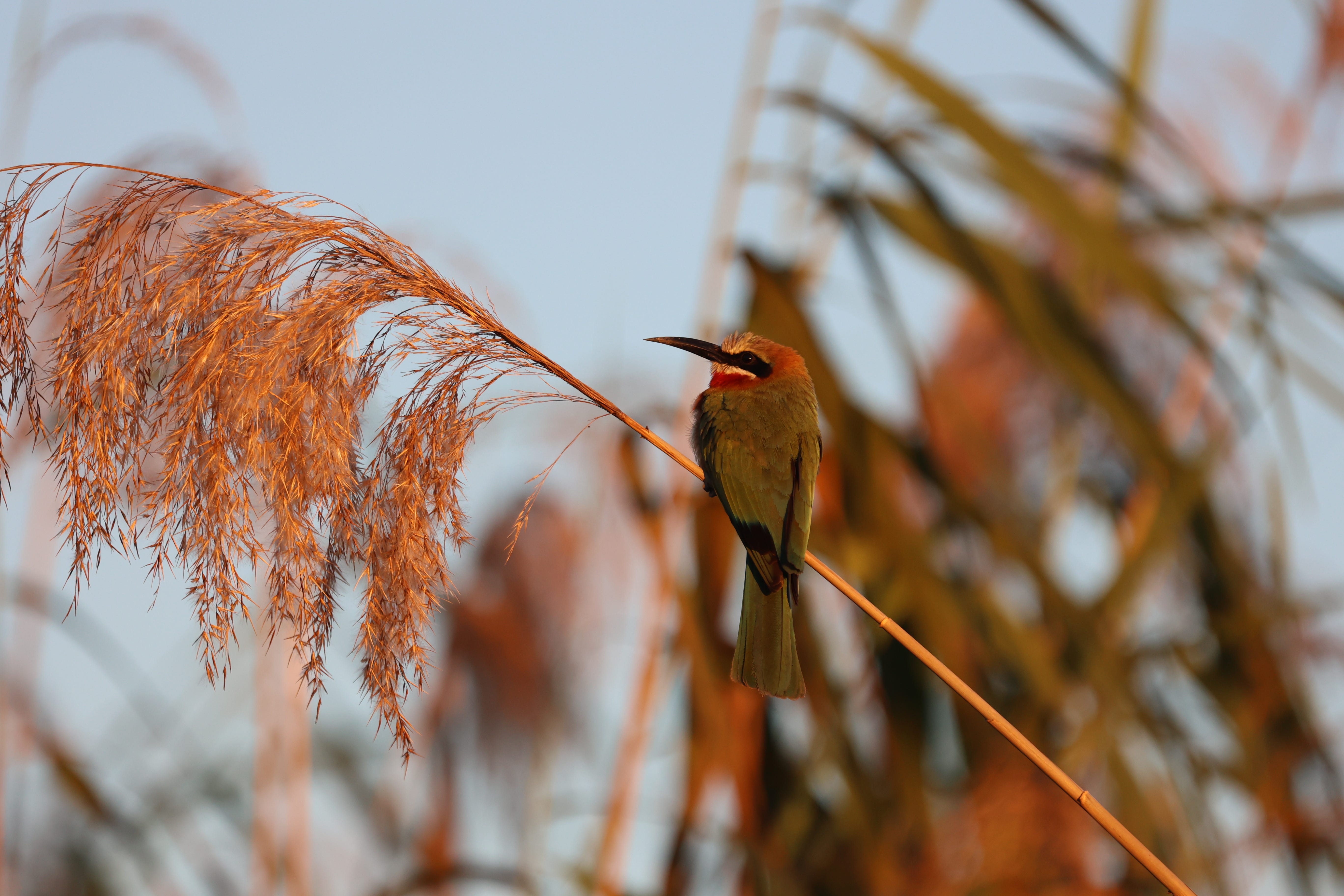
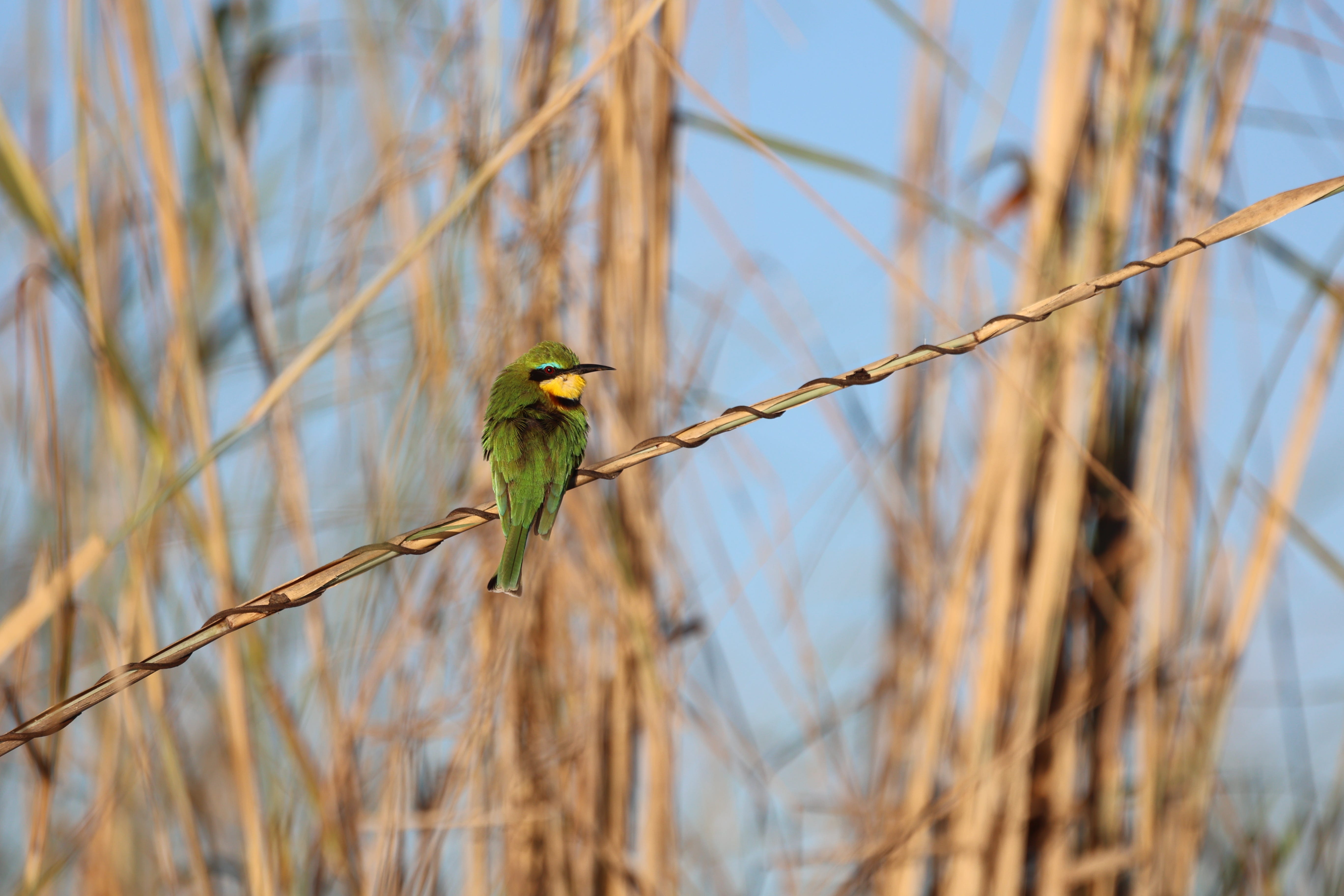
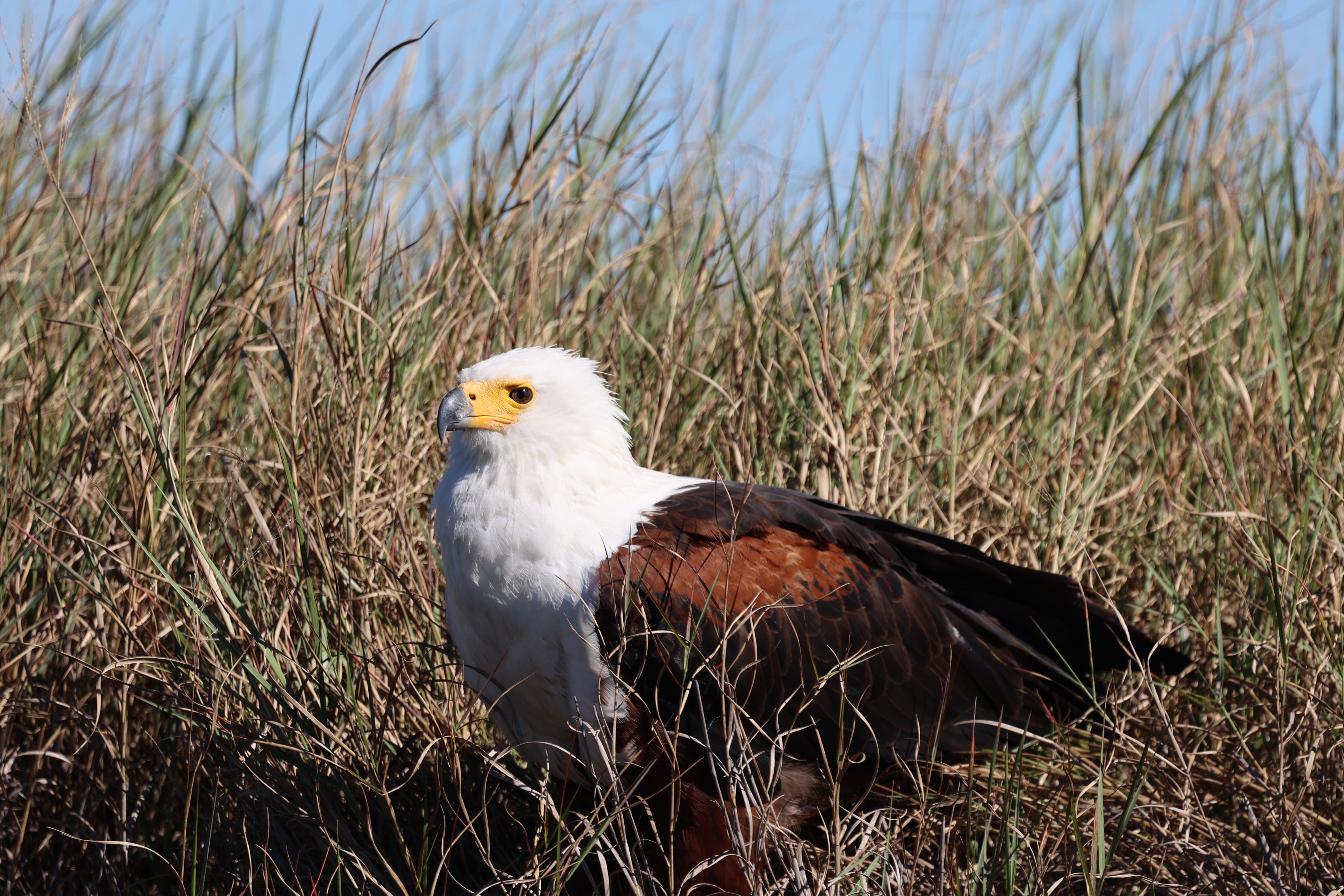
As the sun rose over the Kavango River that first week of the trip, I finished Renkl’s book. It was early in the morning, my favorite time of day, the fast-moving river attracting all kinds of activity. Angola was just across the river to the north, Zambia and Zimbabwe to the east, Botswana to the south. As I relaxed beside Rodeo in our hard-sided camper, the sunshine warmed the riverine grasses around us, inspiring a chorus of birds. Pied kingfishers, little bee eaters, and crimson-breasted shrikes sang their joyous melodies. The screened windows of our camper kept the bugs out, but let the bird song pour in. I marveled at the complexity of their music.
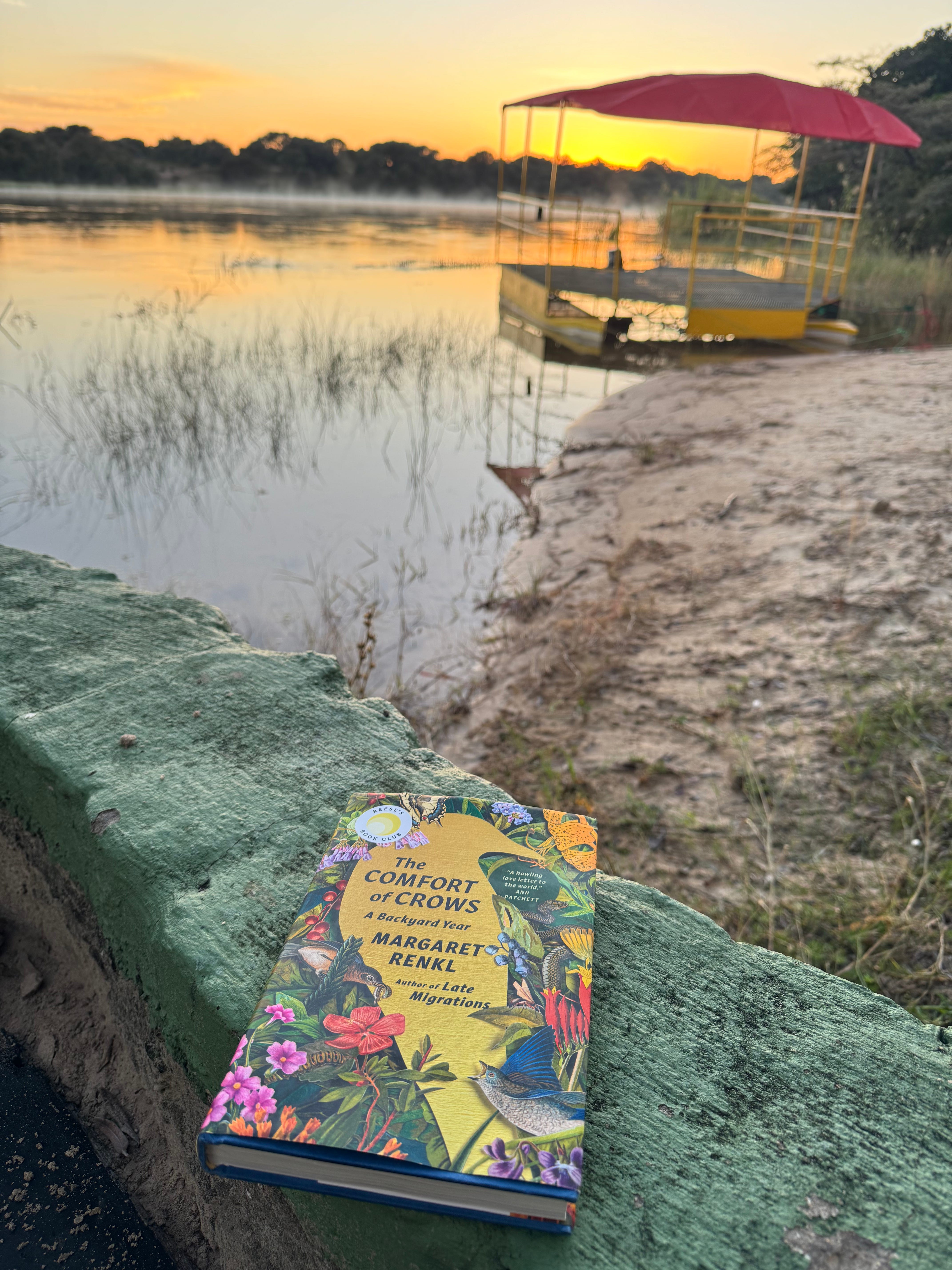
On most trips, I leave a book behind as a gift for the hotel library, the camp host, or the bed and breakfast staff, but I held onto this one. It is tucked in my roller bag beneath our camp bed now, a gift from a good friend who has her own pollinator garden. I will carry it home along with my portable yoga mat and leftover malaria pills, keeping it as a memento to the birds of the Kavango, Kwando, and Zambezi rivers, who delight in their early morning rituals.
Twice! How beautiful. What a special thing to find a book worth keeping.
Such a special book. I'm so glad that it brings you peace and joy. I love that this second trip you have been able to see so many lovely birds and animals. Sounds divine 🫶🫶