
Camping with Hippos

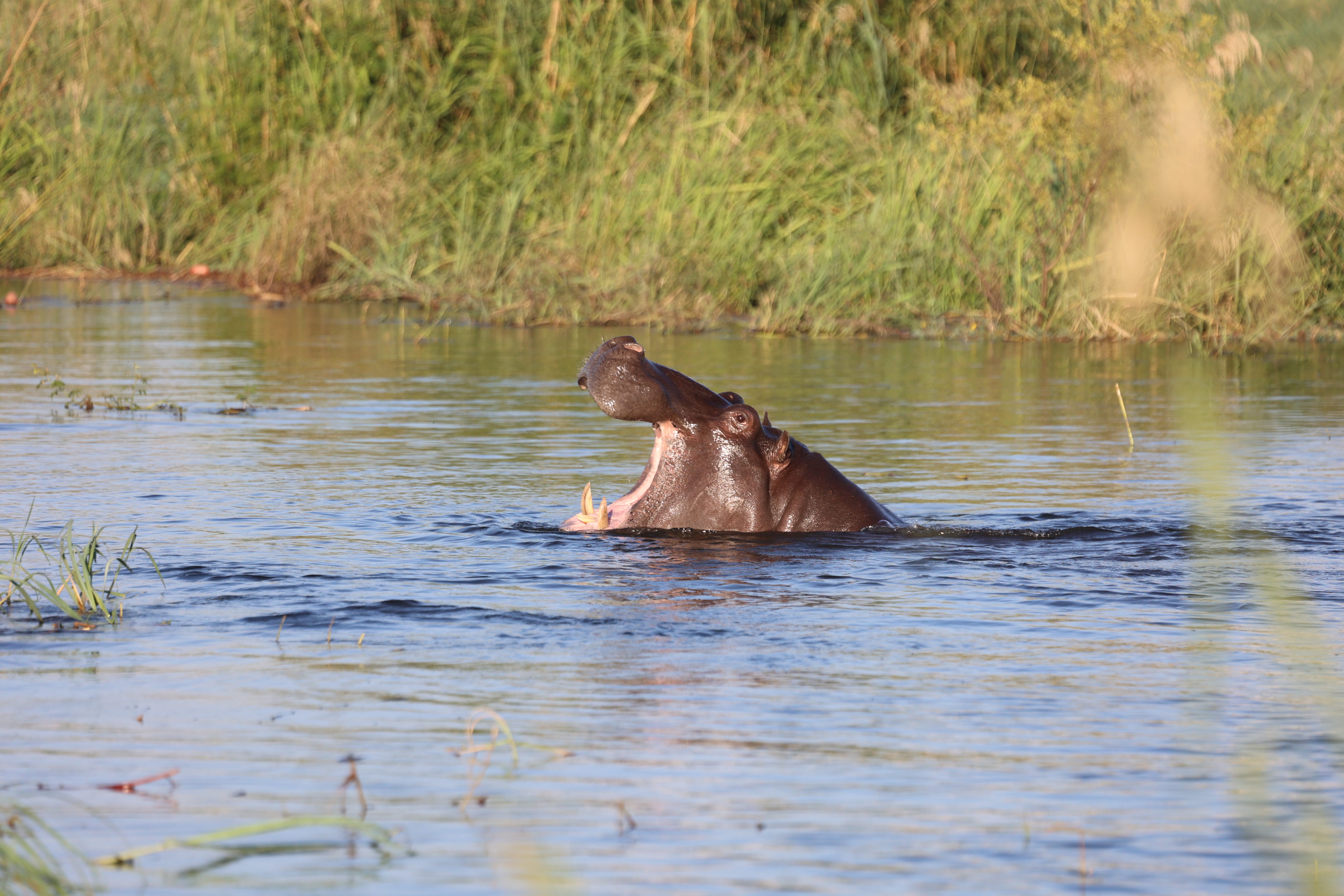
As we rounded a bend on a sandy unpaved road in northeast Namibia, we came head to head with a hippo in Bwabwata National Park. Rodeo quickly put the camper in reverse to get out of its way. We were surprised to see one emerging from the bush in broad daylight, since hippos are mostly aquatic creatures.
The name, hippopotamus, is Greek for river horse, but this creature didn’t look anything like a horse. He had short legs, a wide body and an enormous head. He looked more like an awkward oversized pig than an elegant stallion. Hippos are the third largest land mammal in Africa behind the African elephant and the rhinoceros, but by far the most dangerous. They can easily weigh up to three thousand pounds and although like horses, they are herbivores, they have a deadly bite. It was the closest we came to a direct conflict with this awkward giant. When he chose not to charge us, but instead returned to the river, we felt lucky.
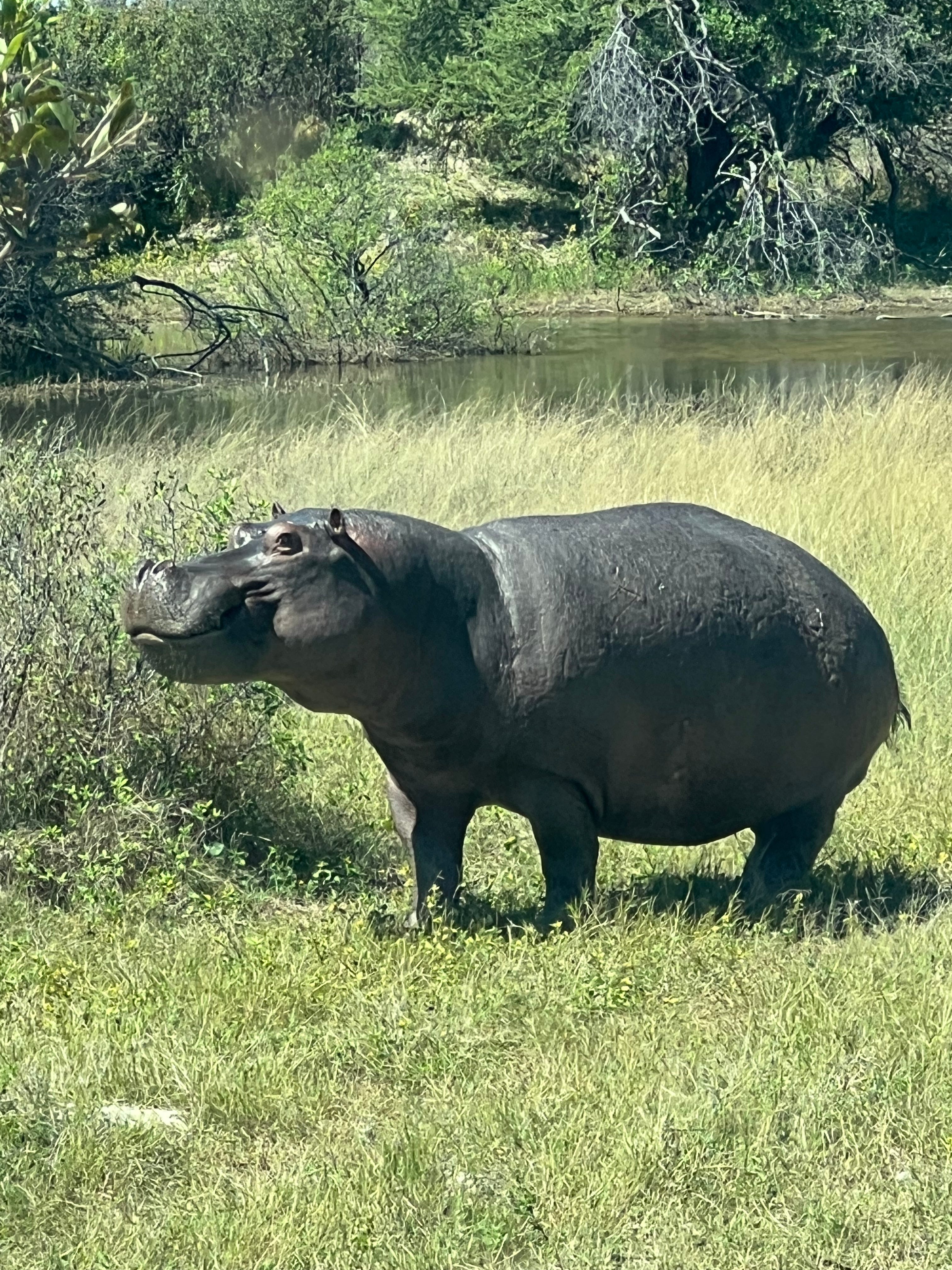
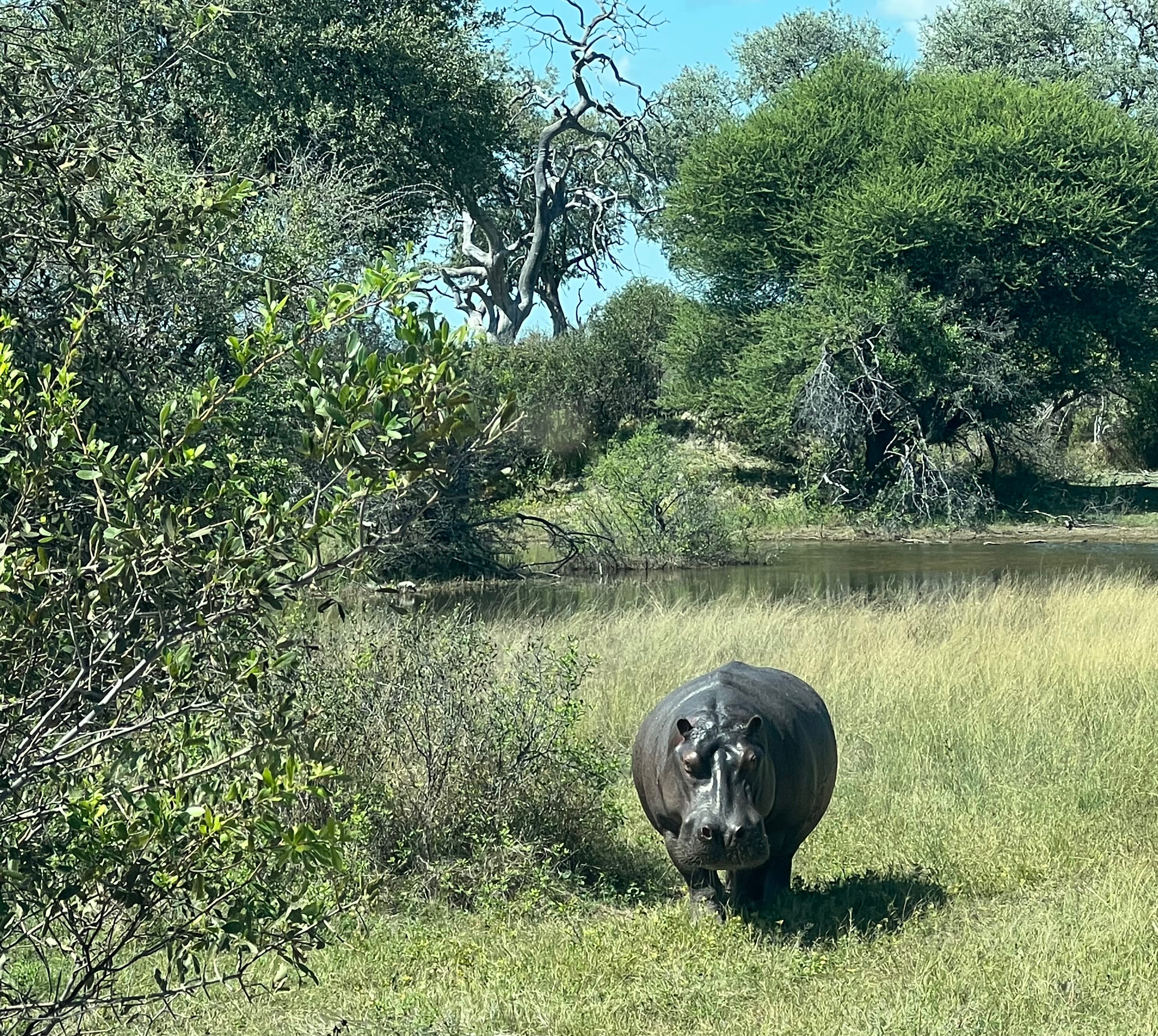
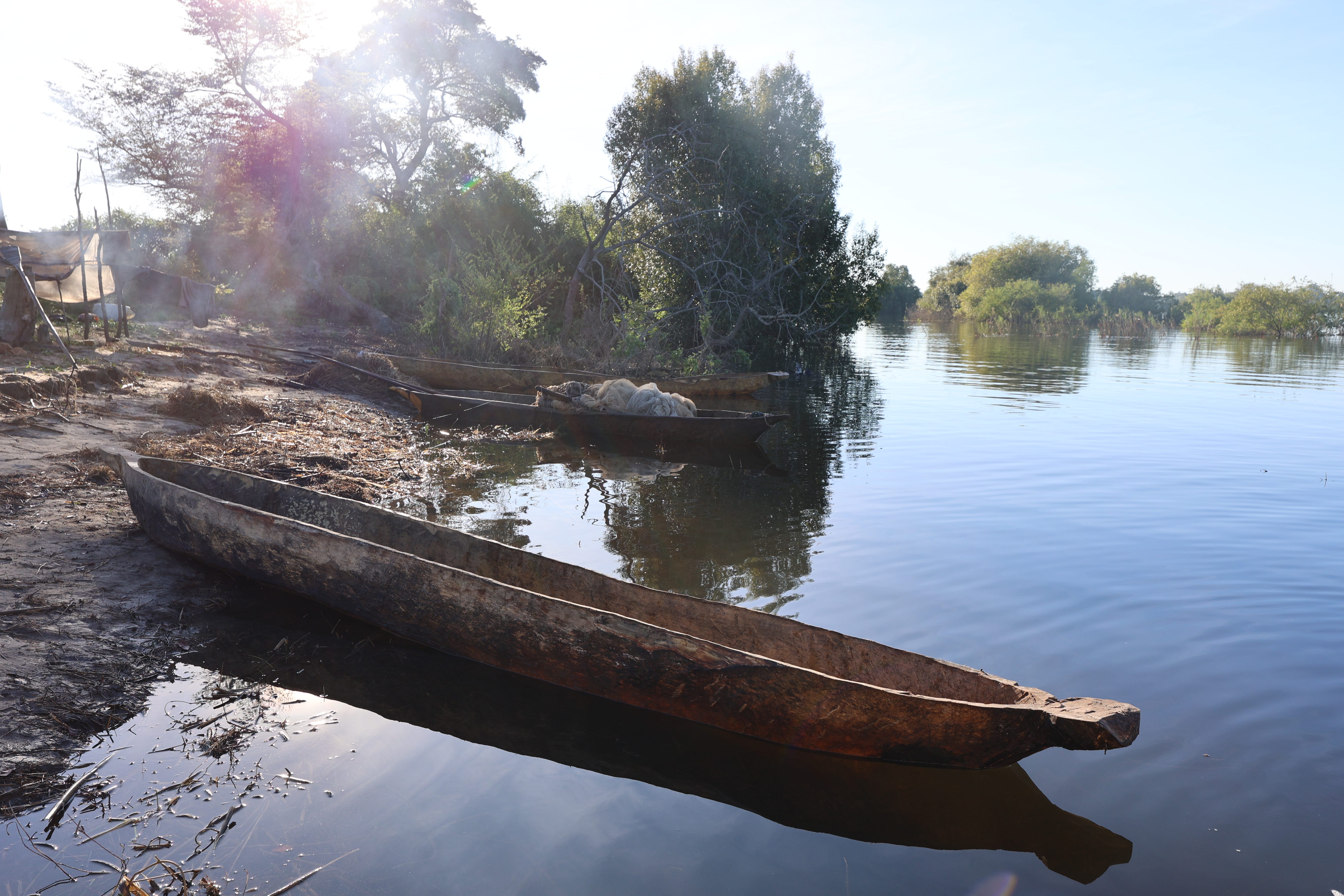
Over the next week, we explored the hippo population in two of three rivers we visited: the Kavango and the Kwando, both meandering and relatively slow moving. The Zambezi River was too swollen for the likes of hippos who prefer calmer, more shallow river habitat for grazing. In the other two rivers, dozens of hippos feasted on grasses and water lilies, remaining mostly submerged, only their eyes and noses above water. Namibia has about three thousand hippos in all, but in Zambia to the northeast, there are an estimated thirty-seven thousand hippos vying for territory on its rivers. I pity the subsistence fishermen in those tippy wood canoes as they are most at risk of fatality because of their livelihood. Hippos have been known to knock the fishermen out of their boat to bite them.
We took three separate river tours, two arranged through resorts where we stayed when we needed a break from camping (about every six days), but our favorite was at Ngulu Island campground. Dan Stephens, a river guide who has lived beside the Kwando for over twenty years, spent five hours with us early one morning. He took us on a small pontoon boat to an island where we hiked. Along the way, we saw dozens of little bee eaters, purple martins, eagles and kingfishers, and several harems of hippos. Usually, the hippos consist of one alpha male accompanied by multiple females and young ones. They defend their stretch of river to outsiders. Dan once had a hippo try to climb onto his pontoon boat, but managed to power away from it.
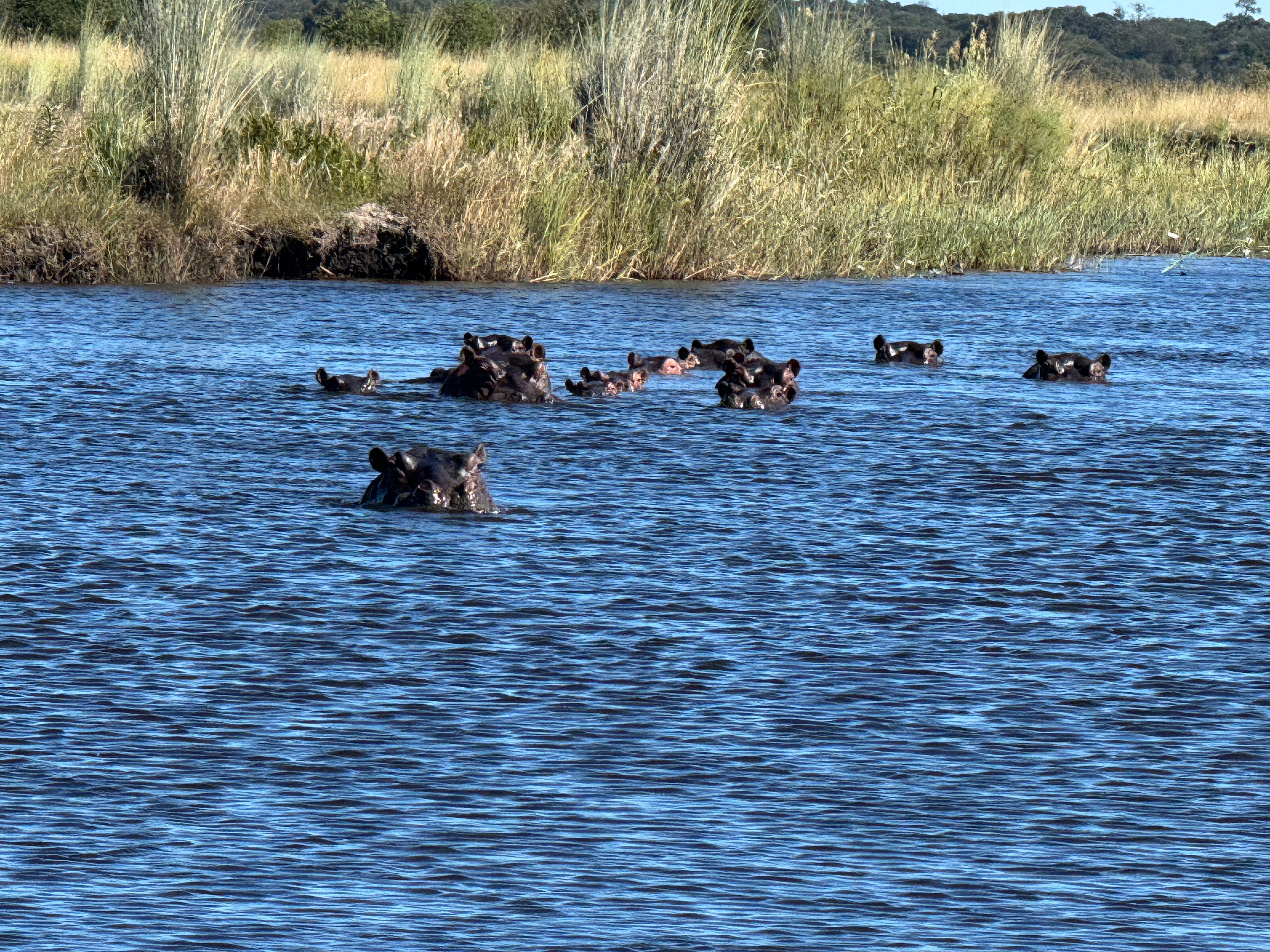
A hippo normally grazes in the river during the day and meanders on shore at night to eat more grass when it’s colder out. During the cold, dry season, when we visited, the outside air temperature fluctuated as much as fifty degrees.
Hippos consume up to eighty pounds of grass per day. Mamas have their babies in the river, where they nurse their young. To suckle, the babies fold their ears closed before sinking beneath the river’s surface to nurse in private. They can hold their breath for up to thirty minutes, so it’s often hard to figure out exactly how many are in each harem.
We followed Dan’s advice the next day and visited a wild camp site where our only neighbors were a hippo family leisurely grazing the full length of the river, a few babies in tow. They kept a close eye on us, but didn’t seem to mind our presence. After dark, they made lots of noise. Rodeo stayed awake for much of it, complaining they were too loud. I wore ear plugs and a noise canceling headset, so I slept like a baby. The next morning, Rodeo played his favorite Doris Day song for the hippos: “Good morning, good morning, it’s great to stay up late, good morning, good morning to you and you and you.” I doubted the hippos appreciated his early morning ritual, but it made him feel better after such a sleepless night.
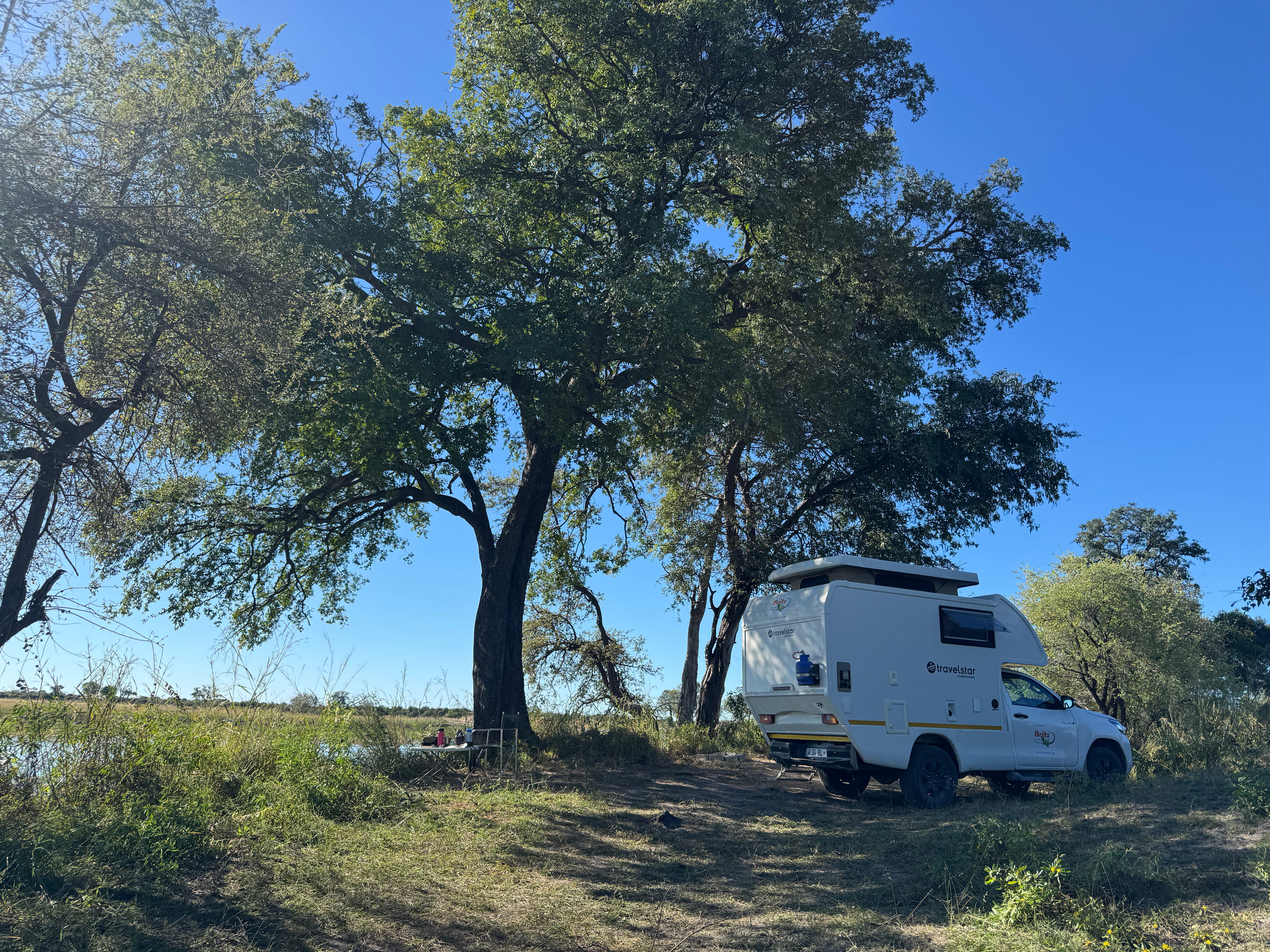
At a busy campground the next night, we set up our camper on a grassy knoll across a dirt road from the river. A woman with a toddler came up to me: “A hippo was grazing right where you’re parked at eleven o’clock last night.” I thanked her for the warning and told her about the multiple crocodile signs at the other end of the campground. She was in a tent near the water’s edge, so I worried a bit for her safety.
That night, I heard the hippo, right outside our camper. I envisioned her as female. She sounded pleased with herself, grunting as she ate. I felt remarkably at ease inside the hard-sided camper only a few feet from this giant. She was minding her business and I was minding mine, no head-to-head conflict between us. In the morning, I poked my head out the front door and she was gone.
So amazing!!
I love reading about your adventures! Thank you for sharing! (Miss you)