
Falling Leaves

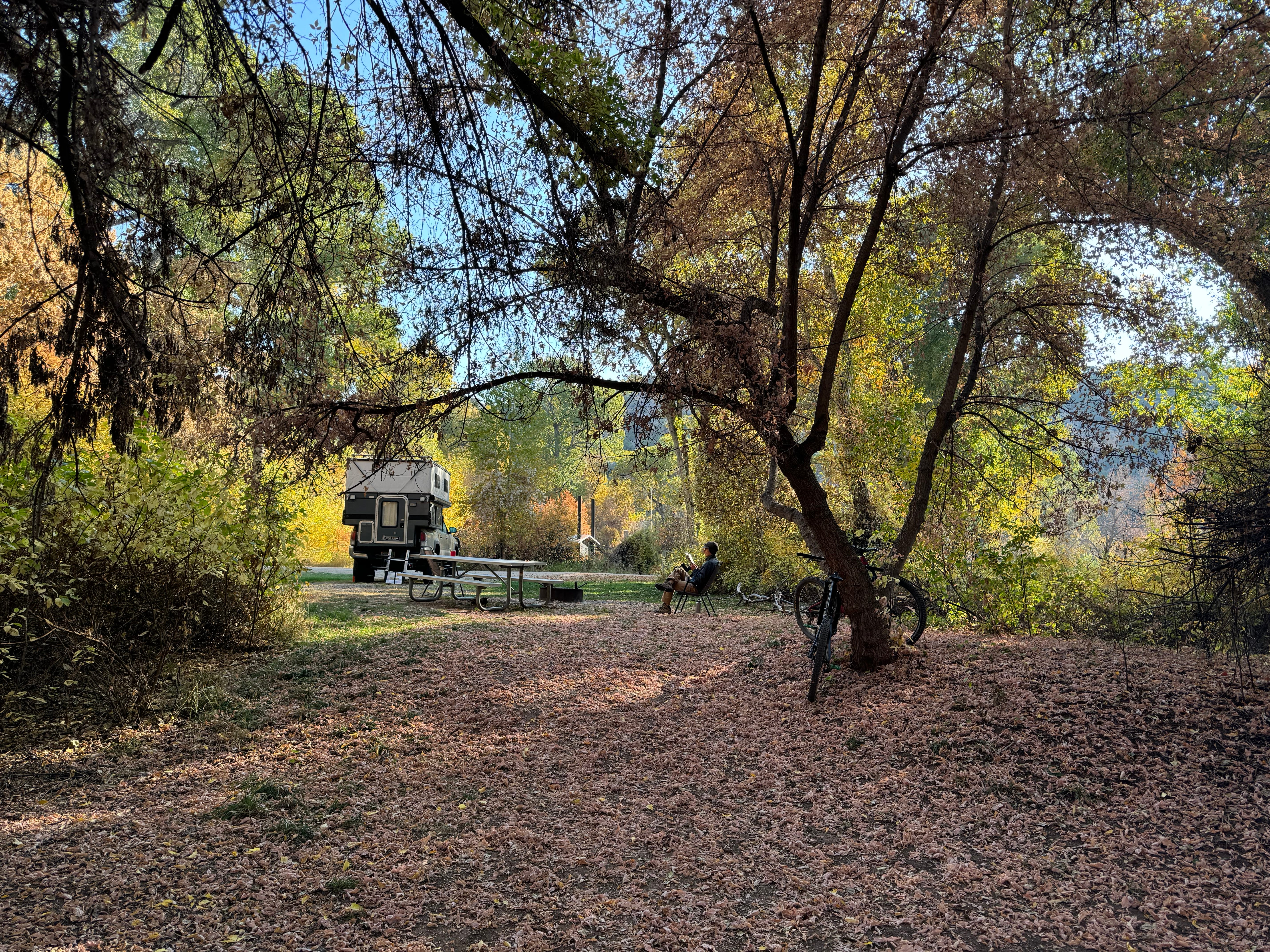
After our trip to Iceland, I had a serious bout of camping withdrawal. My spouse suggested we head to Medicine Lodge State Park at the western edge of the Bighorn Basin for one last camp trip before winter sets in. This time of year, we brace for frigid temperatures and gusty winds in northern Wyoming. After a two-hour drive southeast, I quickly shed my layers. It was seventy degrees and sunny. It was also the first day of hunting season.
The campground was crowded with people dressed in camouflage zipping around on ATVs. We planned to mountain bike, so it definitely threw us off. As we searched for our spot, many were already taken, the other campers waved and smiled as we drove by, making it difficult to be annoyed. There seemed to be a genuine shared joy to be in this place.
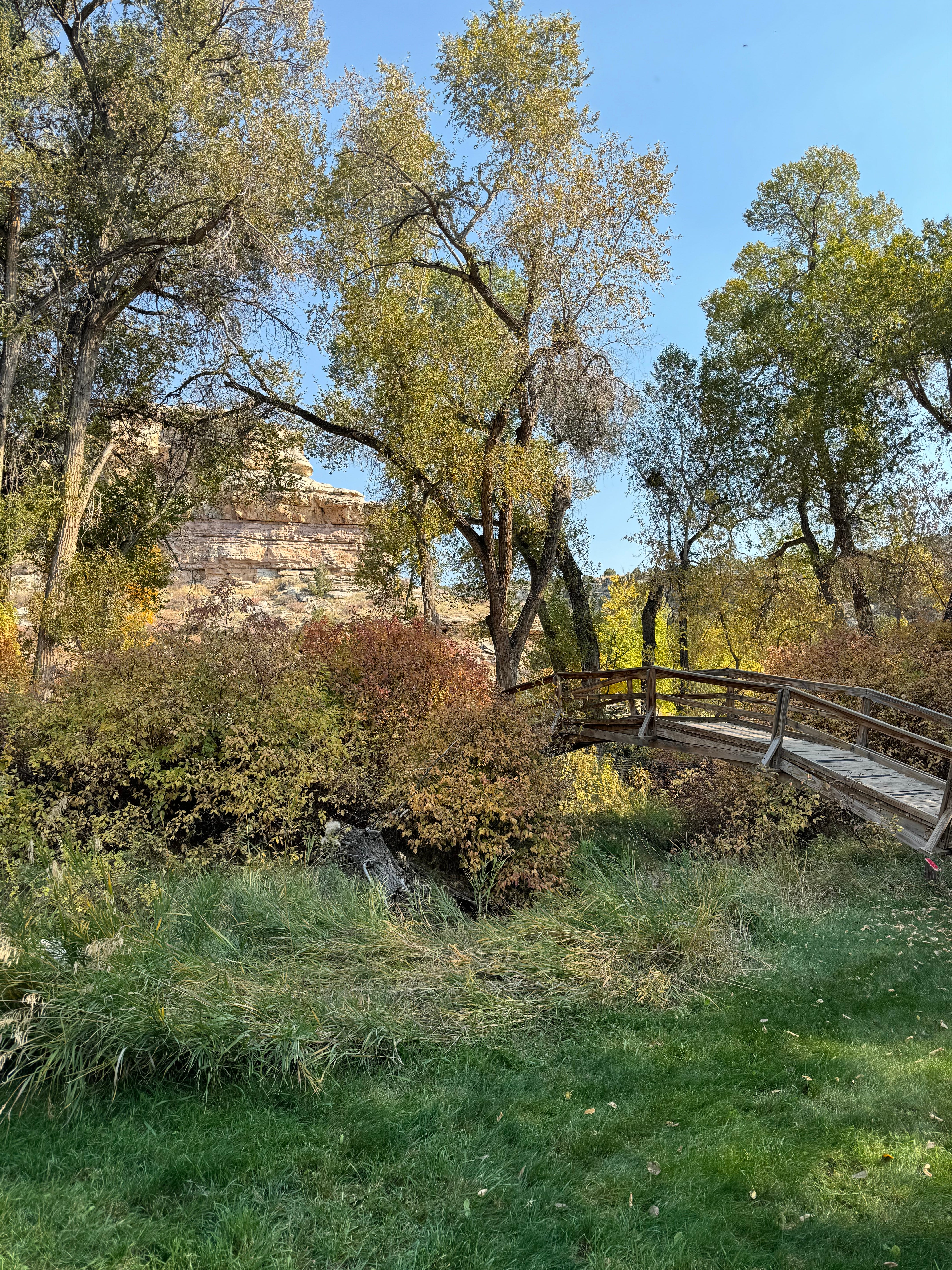
We chose a spot in an area tucked in the trees beside a dry river bed. The cottonwoods in camp were changing color, their leaves beginning to drop. I closed my eyes to listen to them fall as a light wind coaxed them down. I wandered over to the visitor’s center where there are free maps and baseball caps for sale. The gal behind the counter told me the campground is open year round. If we ever wanted to come in the winter, she said, call first so they can plow our campsite in advance. I’d never heard of such a thing at a state park. There was something endearing about that.
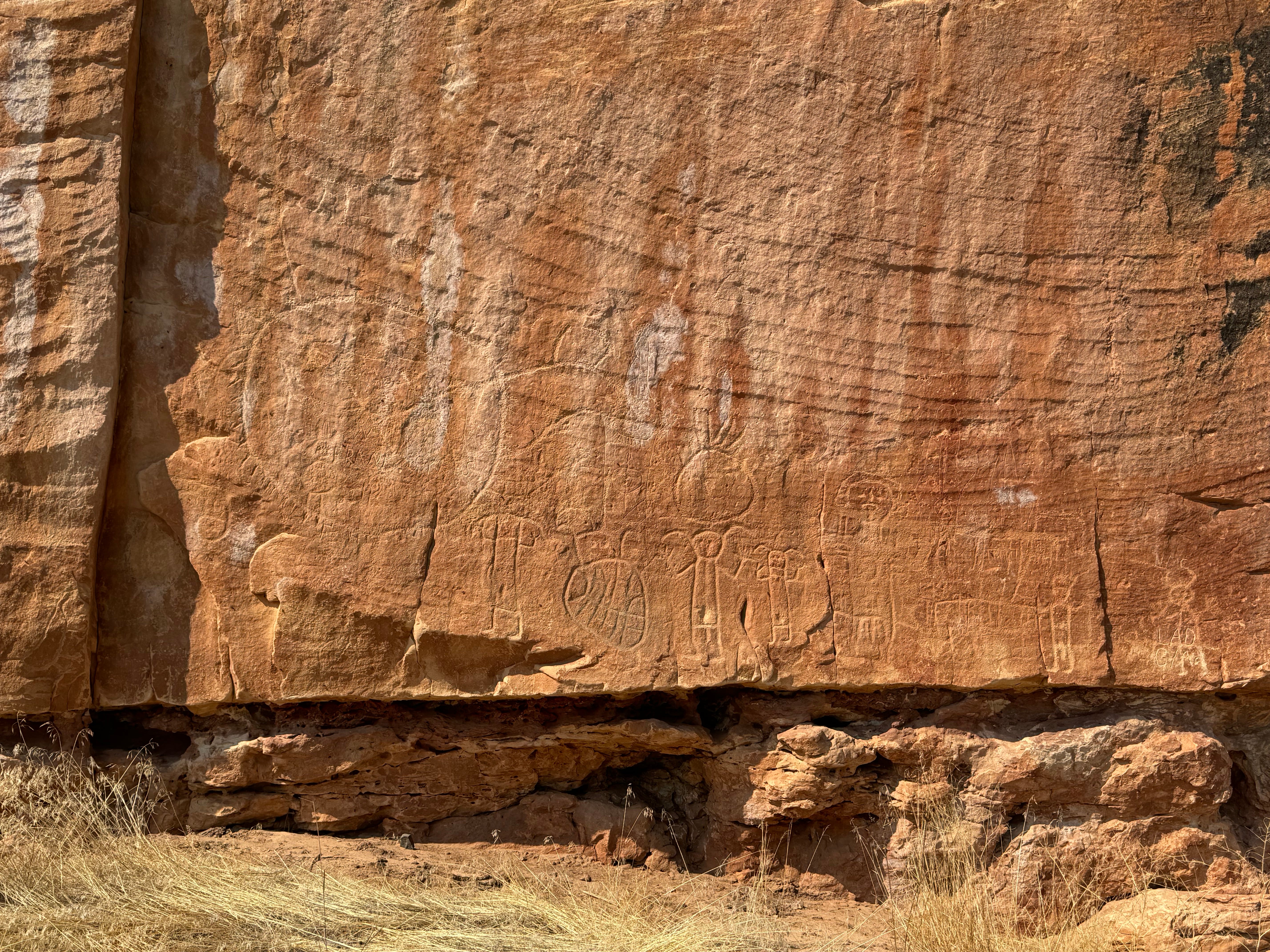
A big draw to this park is a sandstone cliff that contains hundreds of Native American petroglyphs and pictographs just walking distance from the campsite. There are images of elk, bear, warriors, and abstract symbols on the rock wall. In 1969, archaeologists dug down twenty-six feet where they found fire pits, food storage areas, grinding stones, and tools.
The Crow occupied this area for a time, their beads and pottery shards located here. Scientists believe people have lived and visited this place for over ten thousand years. Various markers beside the wall bring the ancient murals to life, and there are informative pamphlets available to identify specific imagery.
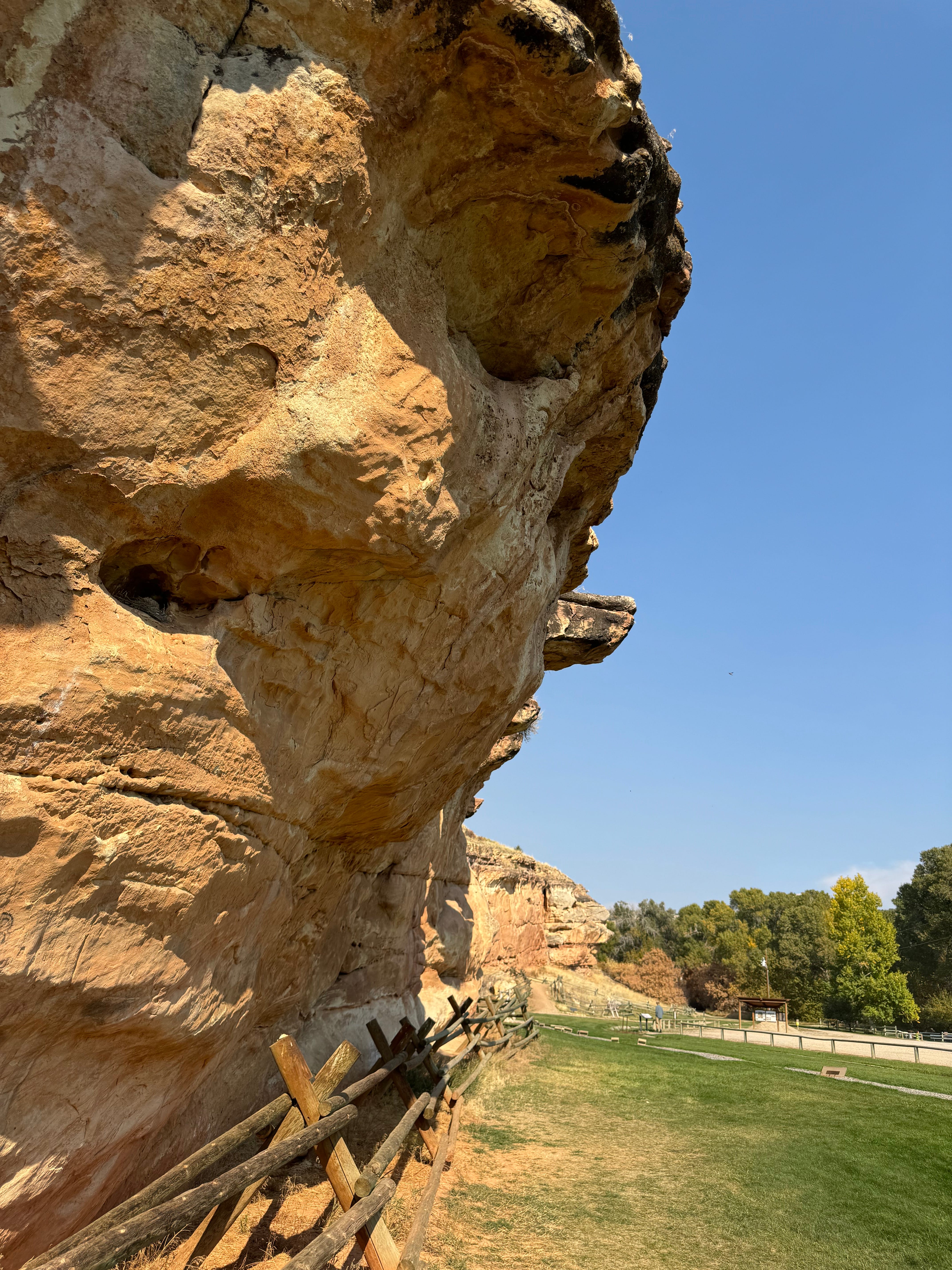
In 1884, Byron Wickwire homesteaded this land, turning it into a productive cattle ranch. The Wyoming Game and Fish purchased the ranch in the early 1970s to create a vast wildlife habitat area that spans twelve thousand acres. The ranch stretches right up into the Bighorns. At the end of the campground is a rocky trail that climbs toward the trailhead to Cloud Peak, the highest summit around, rising 13,000 feet.
The state of Wyoming created two interpretive cabins near the excavation site to highlight the unique natural history of the Bighorn Basin, along with information about the rocks and animals that live nearby. The Bighorns are one hundred and twenty miles long and ninety miles wide. Trails crisscross this wilderness in every direction.
It only rains about six to ten inches per year, so the semi-arid climate preserves its fossils well. Some of them date back to the Cambrian period, 538 million years ago. It is a treasure trove for archaeologists who have discovered dinosaur bones and tracks, ancient marine reptiles and prehistoric mammal fossils all over these mountains.
In the late afternoon, we headed up the main trail on our mountain bikes, coming upon several hunters returning to camp in their ATVs. One guy stopped to tell us he had turned around because the pitch was too steep. He had that jacked up adrenaline vibe of someone who’d just scared themselves good. Every year, people die on ATVs where we live, usually on a tricky hairpin turn or a narrow rough section beside a steep cliff. Speed can be a dangerous thing on some of these dirt roads. Eventually, it did get too rocky, so we turned around, returning to camp at dusk.
After dinner, we hiked up to the ridge above the former ranch for a spectacular view to the west toward the Absaroka Mountains. That night, I slept soundly next to an open window. The temperature dipped to about forty, but I was cozy beneath a comforter, fleece blanket, and sleeping bag. I came prepared because our heater is broken.
We dragged our feet the next morning until checkout time, taking a leisurely walk around camp and returning to our site to read our books and watch the leaves drop from the canopy of trees surrounding us. I felt like I was kissing fall goodbye. I hated the idea of a change in weather, but then I reminded myself that ski season is just around the corner.
I'm in love with the cultural heritage of the area that you write about. It's often overlooked and we don't talk about this beautiful existence often enough.
Love this! Makes me want to meet you there for tea, walks and book reads and talks 🫶