
The Old Bookstore

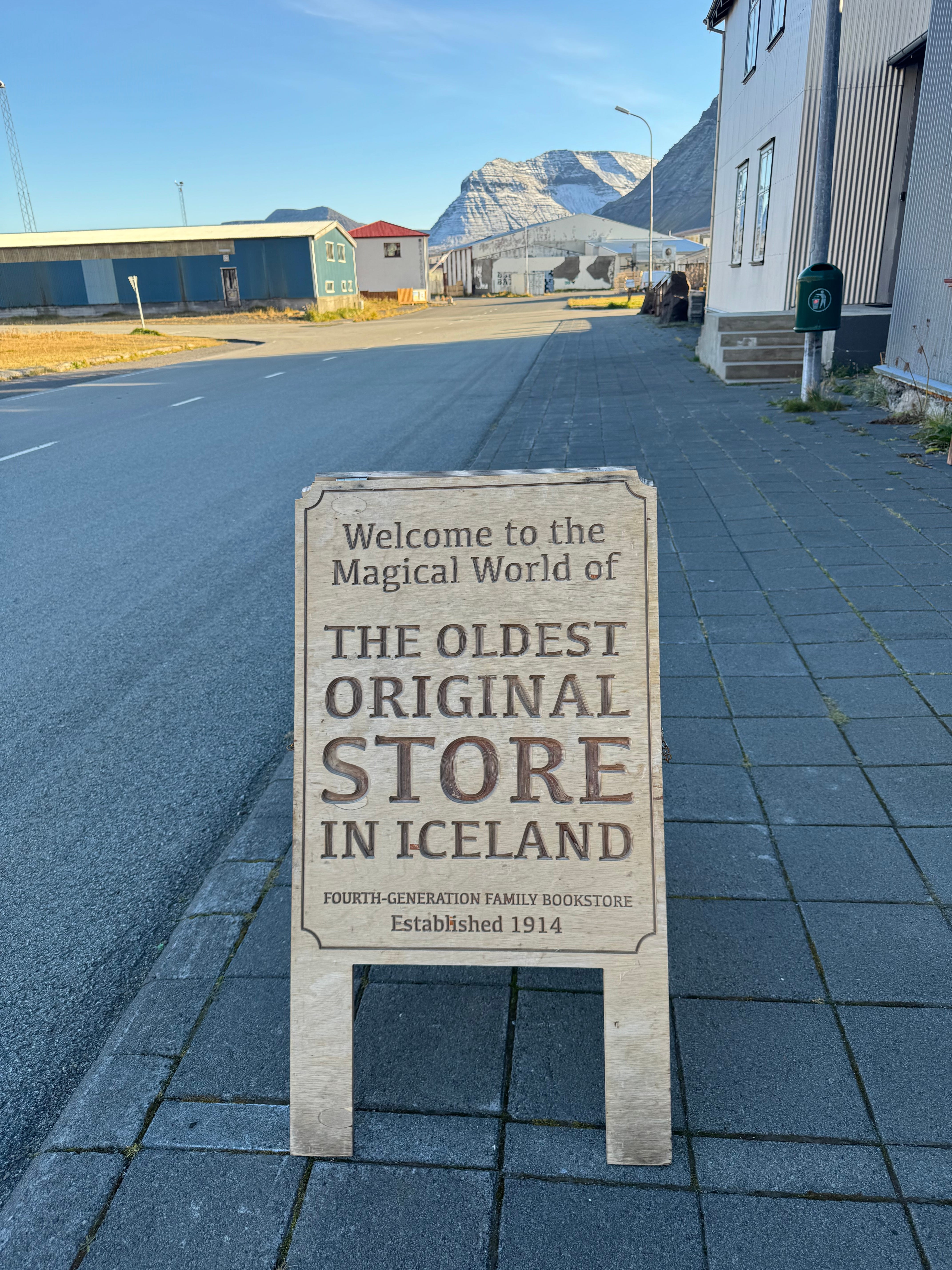
A poster on a bathroom wall in a campground inspired me to visit The Old Bookstore in Flateyri, Iceland. It showed a woman dressed in a traditional outfit, a billowy white blouse with a giant bow at her neck, a wide plaid skirt, and a black beret, standing in front of a bookcase filled with volumes. I had no idea that I would actually meet her, but I wanted to go there. I am not a big shopper, but I do have a weakness for exploring cool bookstores when I travel.
The same family has owned and operated this independent book stall since 1914. It is located in a remote fishing village tucked deep in the Westfjords. It was quite the drive to get there, but worth it. The Jovinsonns have supplied a variety of books to this tiny community and thrived, against all odds. Eypor, the current owner, got it from his mother, who inherited it from her grandparents.
I met Eypor’s mother because he was on a trip to New York. I recognized her smile from the poster. She described herself as mostly retired and it clearly agreed with her. Dressed in casual clothes: a pullover sweater, black trousers and matching jacket, she had clearly lost weight and looked great.
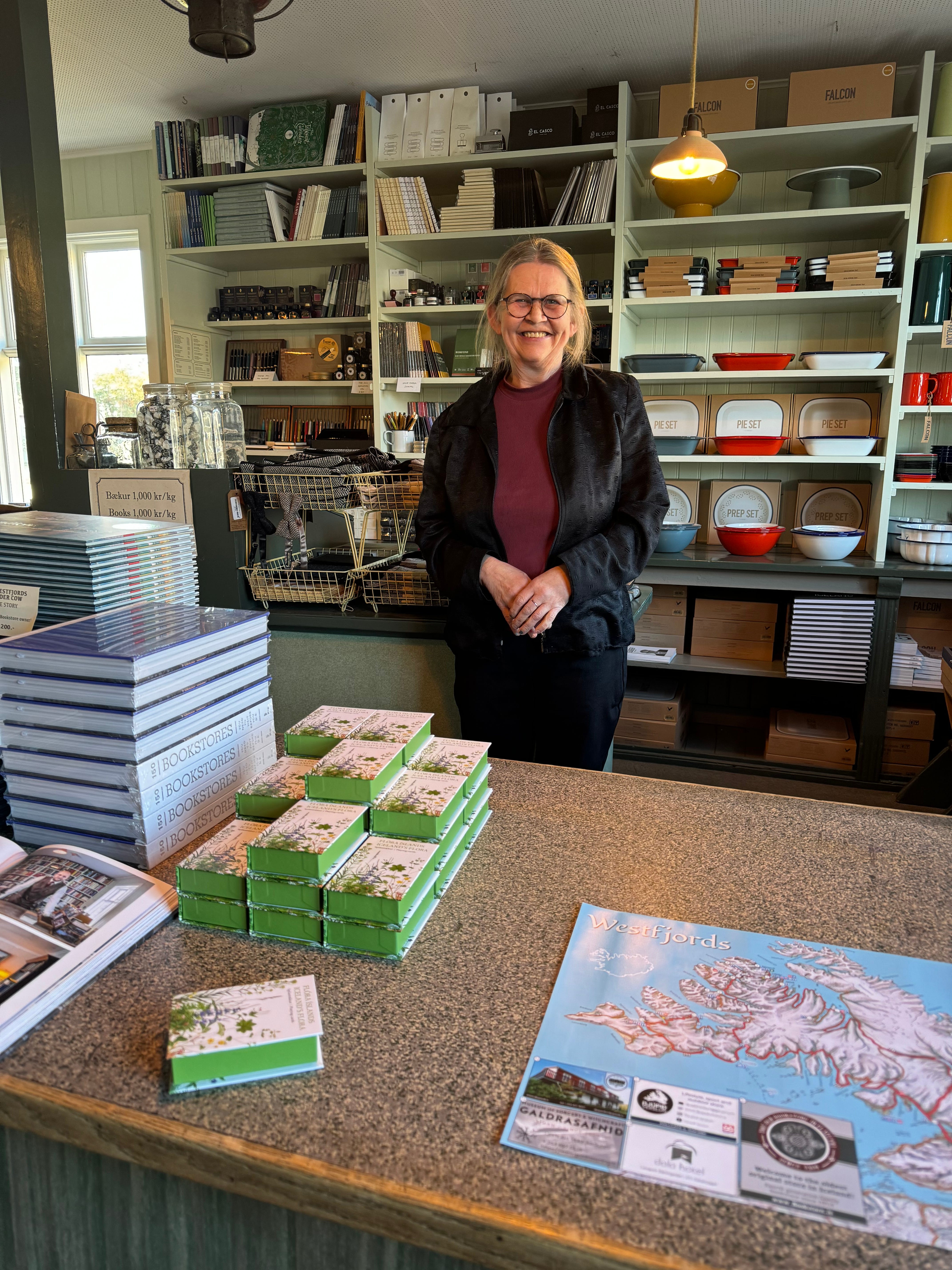
I told her about my nextdoor neighbor, an antique dealer, who would go crazy for this place. She smiled proudly and encouraged me to snap as many photos as I wanted to show him. Mrs. Jovinsonn told me about the various things they’ve sold over the years, including buttons to mend shirts, dry goods, even string. Whatever the community needed, they always tried to supply it. Maybe that was their trick, establishing loyalty among the townspeople.
Much of the shop’s equipment is original, including its cash register. An ancient scale is still used to weigh books. Apparently, her son sells some of them by the pound like fish at the market. The scale is still in use. I’d never heard of such a thing. I felt like I was time traveling.
There were books piled in every nook and cranny. Shelves and countertops were full. Knick knacks scattered throughout the shop reminded me of a treasure hunt. Kodak film for 35 mm cameras poked out of small drawers on the far wall, along with gift cards and paper bookmarks. Inventory was tucked in wooden file drawers beneath some of the counters, no doubt built by her grandfather who used to live upstairs.
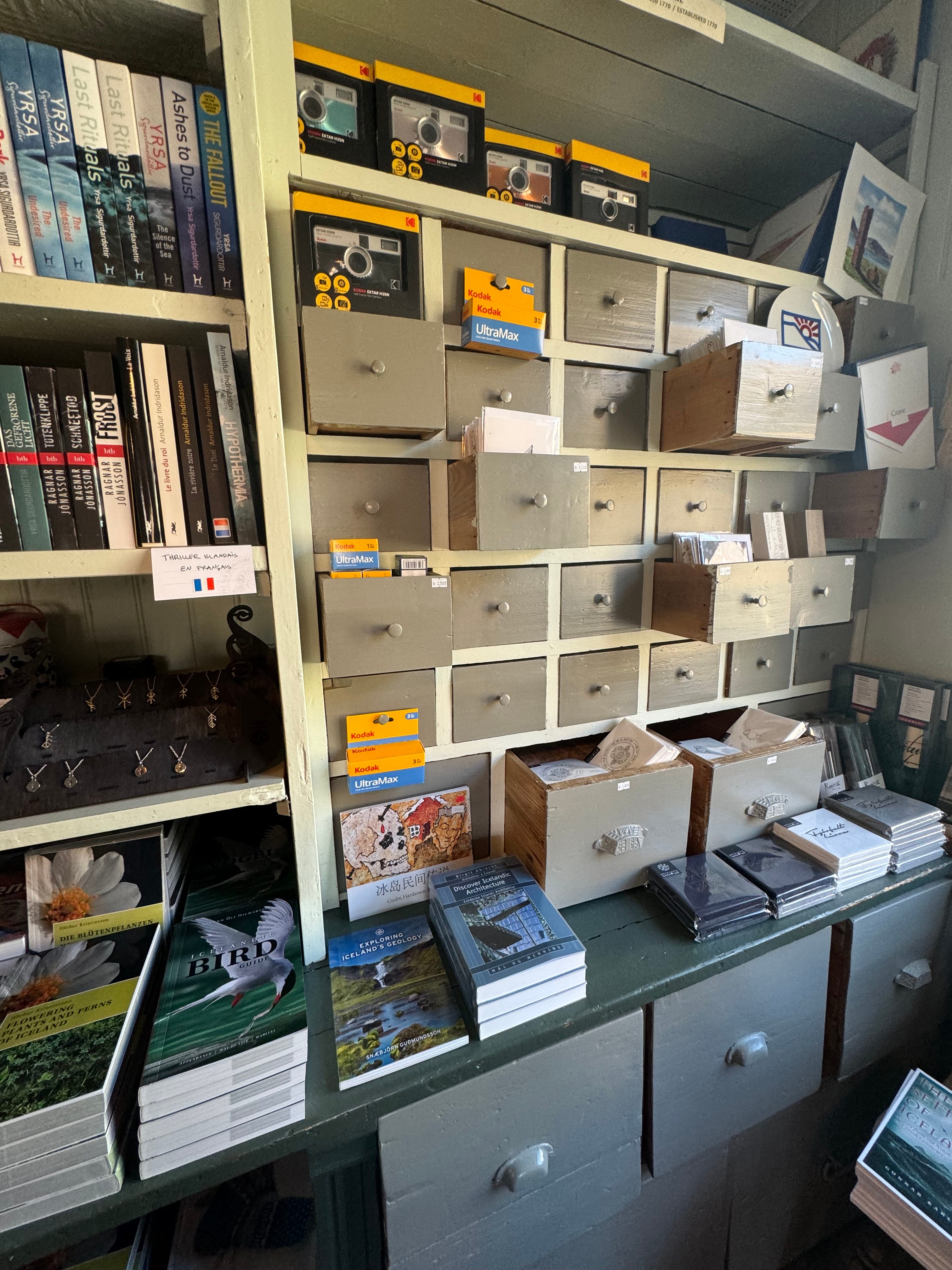
Many of the books were written in Icelandic, a Nordic language that I found difficult to navigate, but also quite a few were in English. Luckily, they teach English in school, so we had no problem communicating with everyone, especially the young people. One of my favorite books, Lost in Iceland, had amazing landscape photos and great stories to tell about all the natural disasters that have rattled this country. Best of all, it was small and lightweight, so I could fit it in my luggage. For gift items, there was flaky Icelandic salt made in the Westfjords, bookstore magnets with my new friend posing in her traditional outfit like in the poster, and decorative napkins with the store’s monogram on it.
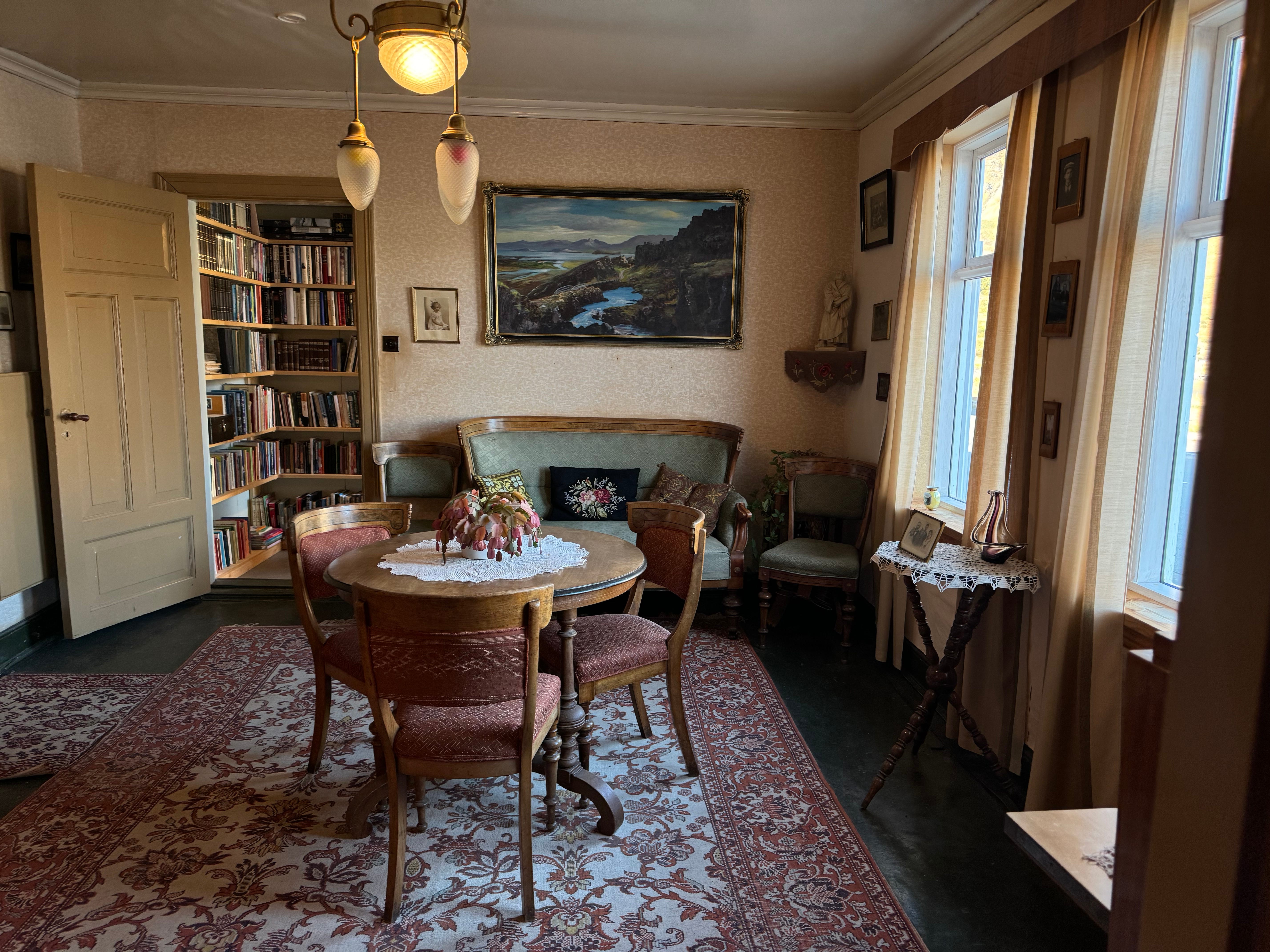
The family eventually expanded the building’s footprint adding a dining room, kitchen, and living room that is decorated with vintage furniture, including a piano and an old radio. It is now a museum. These days, visitors can rent the bedrooms upstairs because the family lives elsewhere.
There are few shops in this two-block downtown. Flateyri is best known for its fish plant located at the end of the road beside the harbor. Cod, haddock, and herring are caught right offshore and processed here. It hasn’t always gone smoothly. Back in 2011, the fishing plant nearly went bankrupt. Even worse, a massive avalanche destroyed twenty nine homes and killed twenty residents about thirty years ago. In a town with a population around two hundred, it was a huge loss and left a significant scar on the community. Earlier that same year, another Westfjord village, Sudavik, suffered a similar fate.
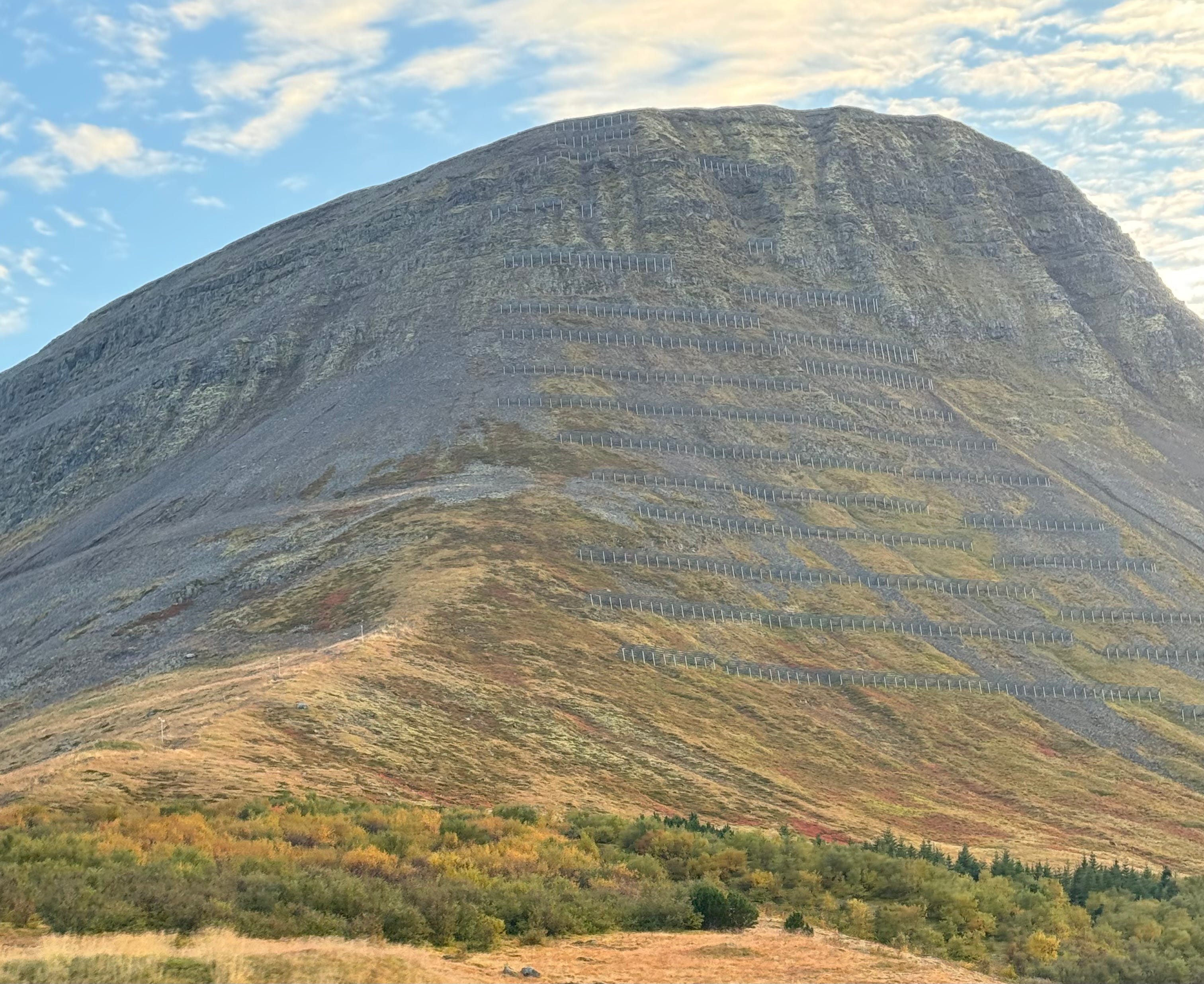
After the avalanches, the country rallied around these two places, sparking a movement toward better monitoring of snow conditions and prevention techniques. Barriers were built just outside of Flateyri. And there are now avalanche fences all over the Westfjords. They remind me of the snow drift fences we have in Wyoming to help keep the roads clear during the winter.
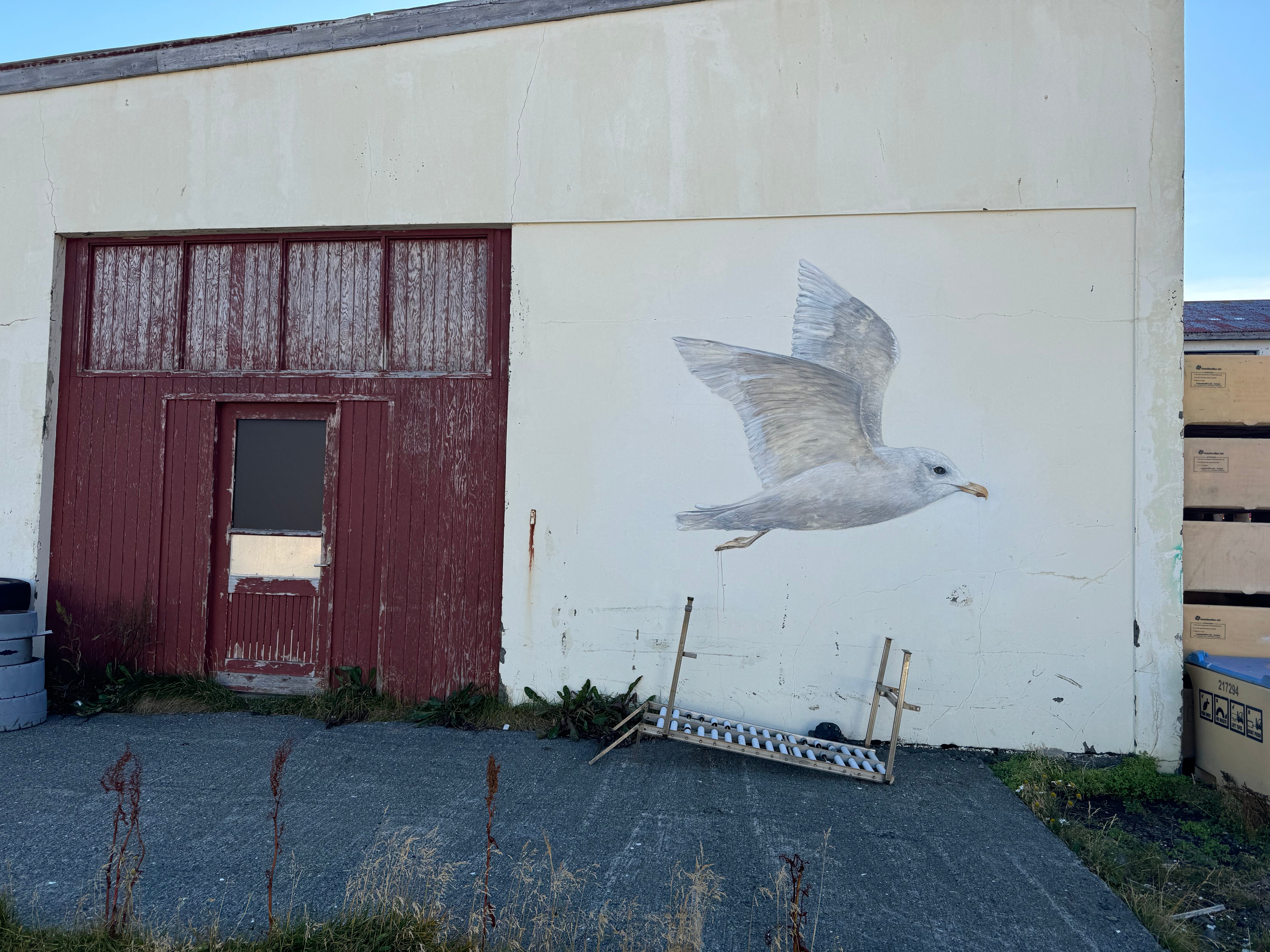
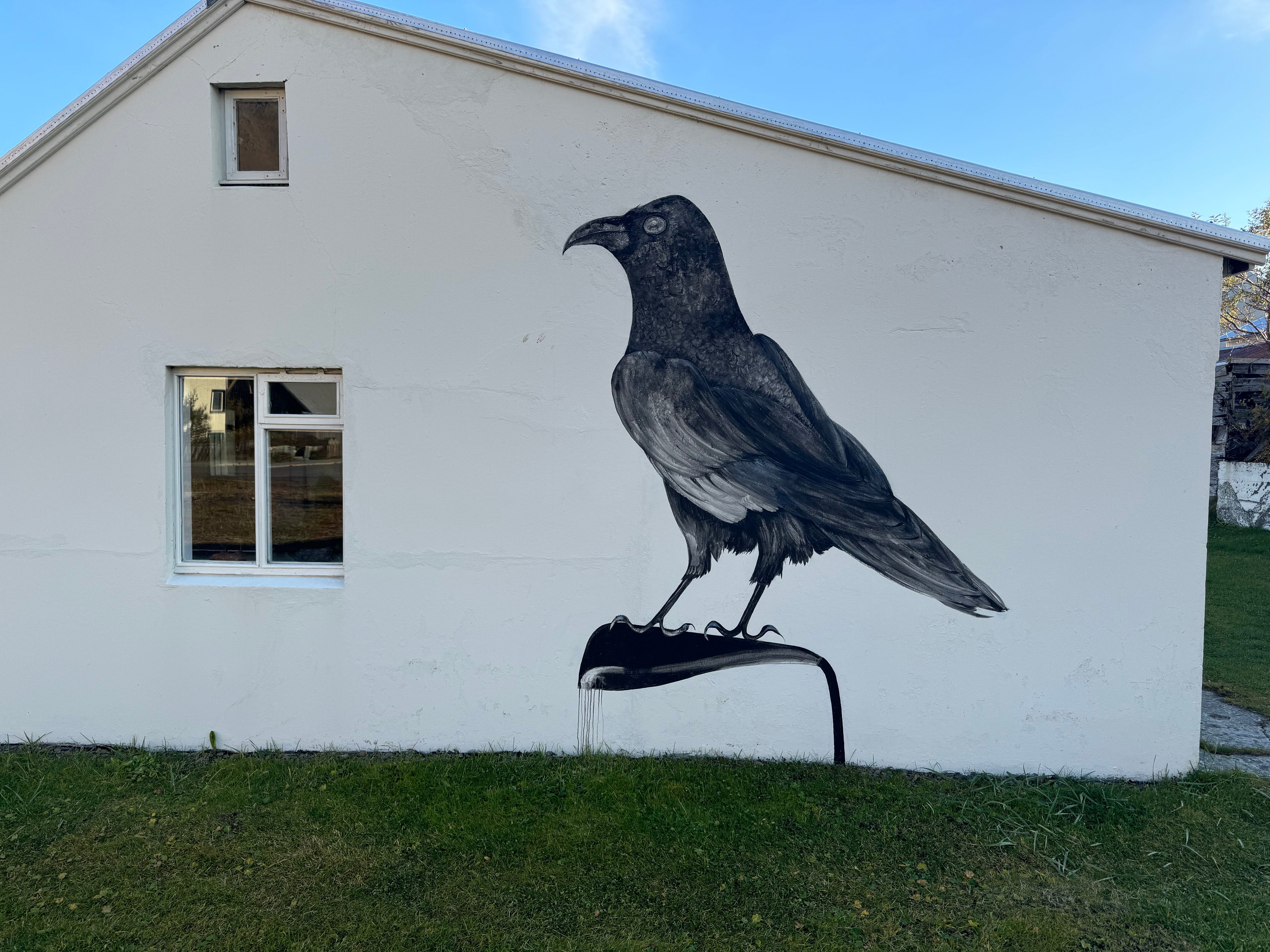
After visiting the bookstore, I wandered around town to view some bird murals of a local artist. Jean Larson, an American-Icelander from Northern Michigan, has lived here for fourteen years. Three years ago, she started painting murals around town as a nod to the biodiversity in the area. Thirteen different native birds are on display, some in surprising places, like the fish plant’s exterior wall, where a glaucous gull flies beside the sea. After a delicious lunch at a downtown cafe, I admired the white wagtail bird painted near its front door.
I got a map of where her artwork is around town, but only found eight of them before I had to leave. The campground is closed in the fall and it was getting late in the day, the sun low on the horizon. It gave me the perfect excuse to return to Flateyri. When I come back, I’ll find the rest of the birds and stay upstairs at The Old Bookstore.
This is such a beautiful wandering.