
The Skeleton Coast

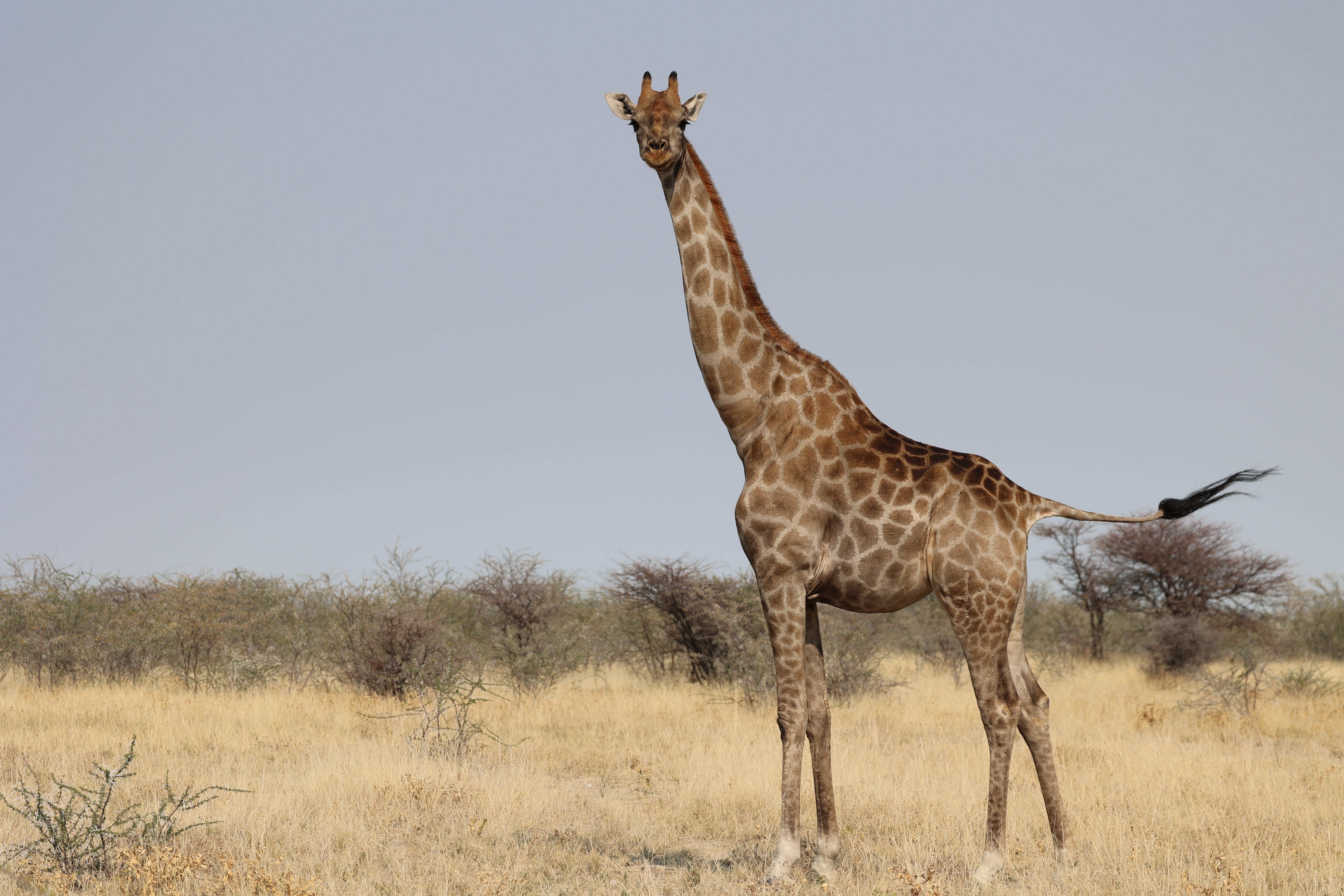
A band of four giraffes graze on thorn bushes beside the dirt road, their long necks stretched out to nibble the tops of the trees. They are the last we see of large land mammals before heading to a notorious stretch of African coastline. The ocean here is a graveyard of ships, large and small, littering the sea floor.
We are bound for a campsite just shy of the park entrance, hoping it will be open and available. Without a reservation, one never knows, but the smattering of rolling red hills, like a Georgia O’Keefe painting, make this excursion worth it. One hundred and thirty five million years ago a fracture in the earth split the continental shelf in two. As multiple eruptions of basalt lava sculpted this landscape, Africa and South America drifted apart allowing the Atlantic Ocean to fill in the space. Only the most adaptive plants and bugs thrive in this ancient desert. Moisture here is drawn exclusively from the fog that rolls in daily off the coast.
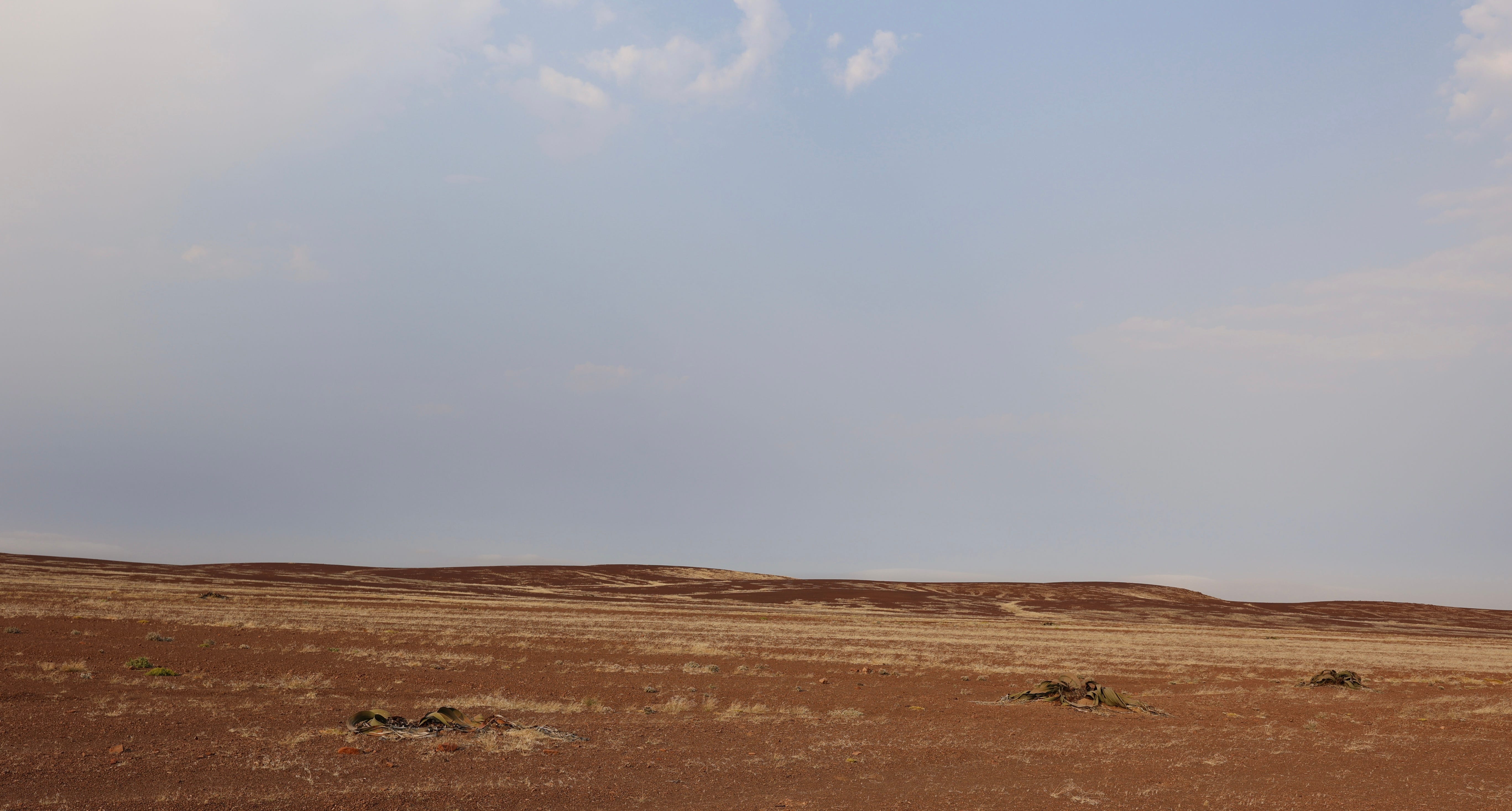
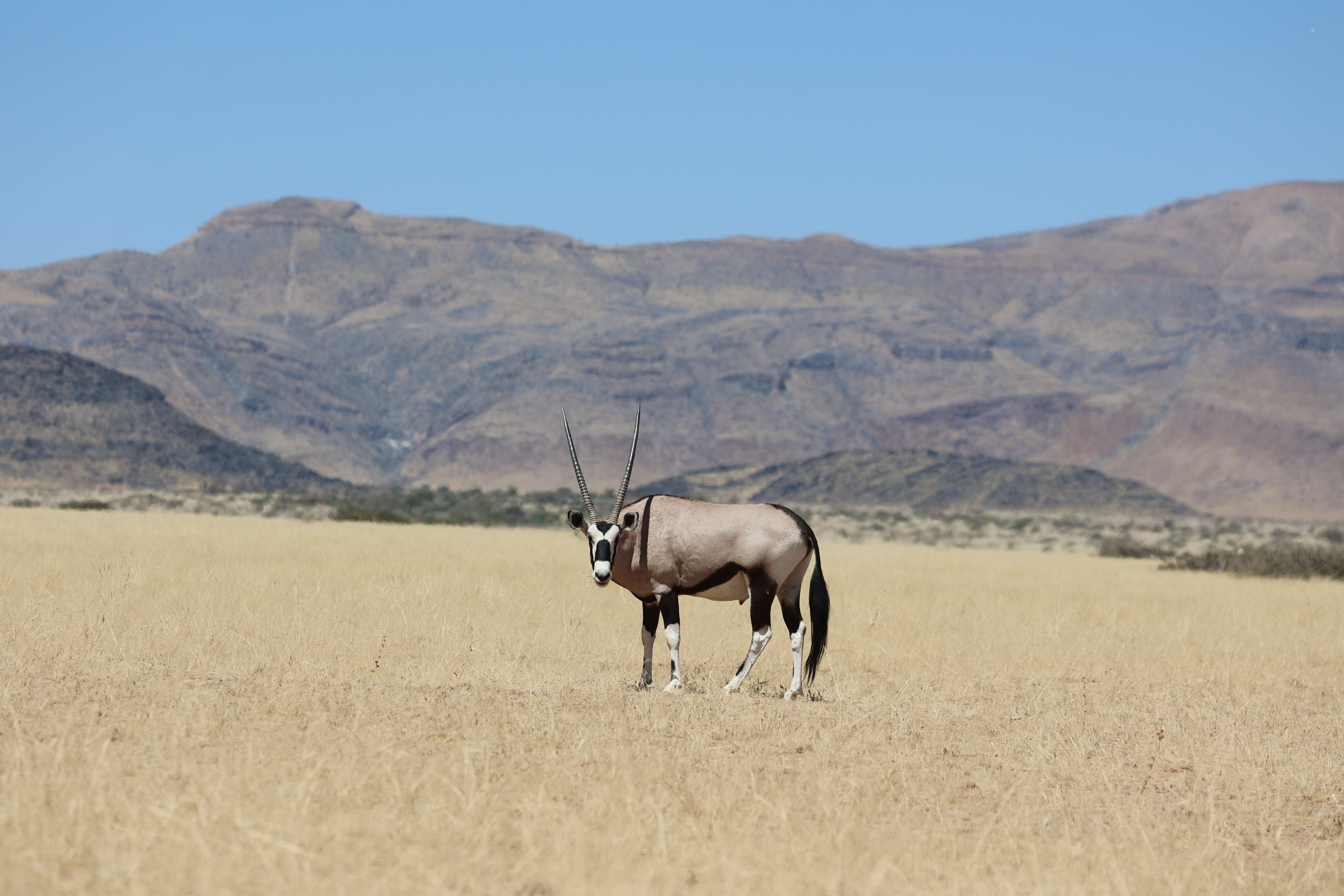
Namibia’s national plant, the welwitschia, is a good example of resilience. Protected for its importance to the landscape, these unique plants thrive by spreading their fine roots along the surface of the soil to soak up moisture. Welwitschia are related to pine trees but look more like battered weeds flung from the earth. Some of them are several thousand years old. They grow only in Namibia and southwest Angola, providing sustenance to zebras, rhinos, and oryx (an African antelope). The plant also serves as habitat for rodents, reptiles, and beetles.
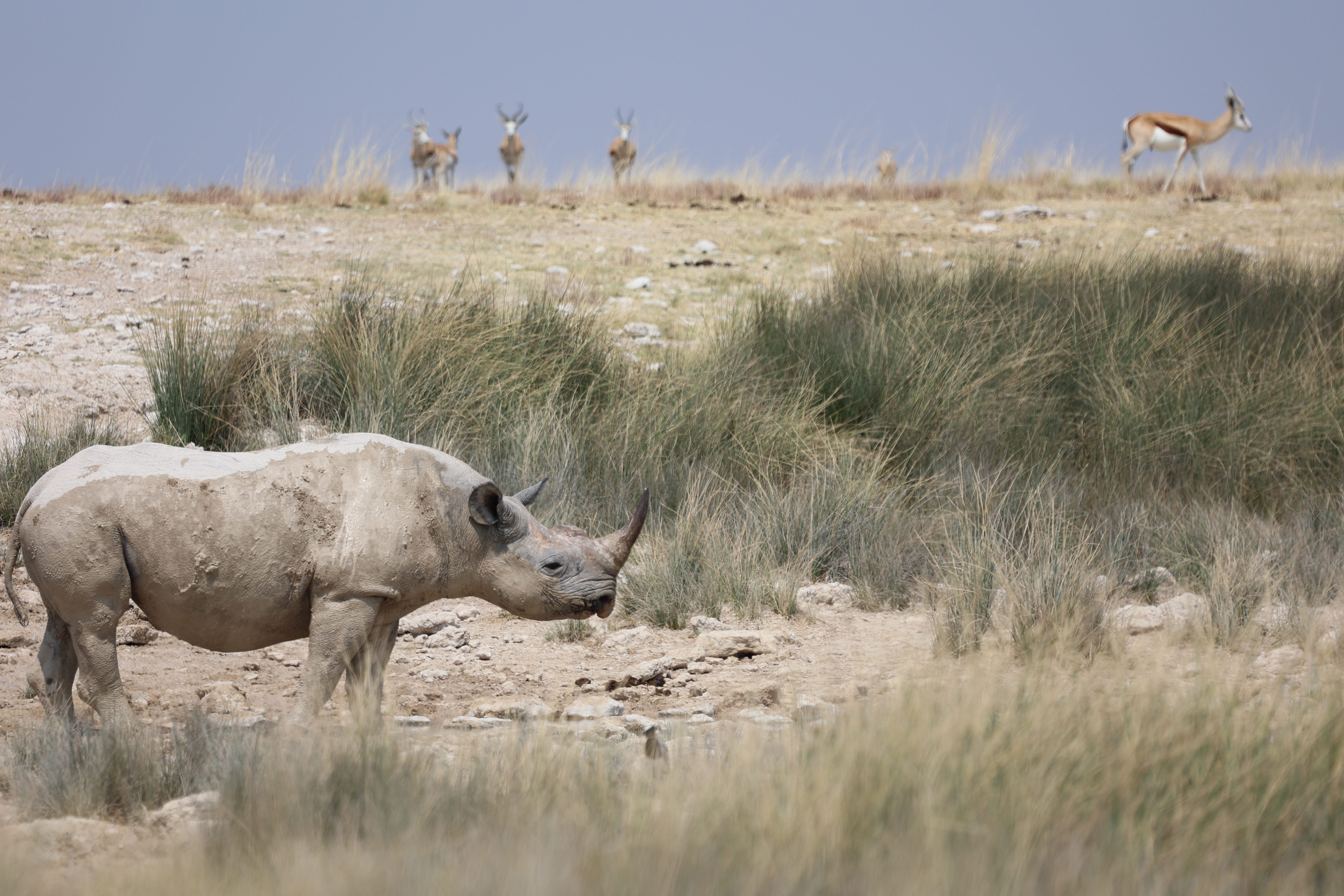
Continuing westward, a rare lone brown hyena crosses the road in front of us. Its shaggy dark brown coat, pointed ears, and striped legs make him easy to identify. Brown hyenas are the trash collectors of nature, eating whatever carrion washes up on shore. Like wolves, they form packs and help rear their young. He keeps moving, never once looking back at us.
Arriving at the campsite just before sunset, Simon, the caretaker, greets us with a toothless grin. I heave a sigh of relief that we can stay here for the night. He lives in a small house across the road. When I offer him biscuits, he gratefully accepts the gift. He locks us into a fenced area for the evening, to keep us safe from large mammals, giving us a key to the restroom, though we are the only ones there.
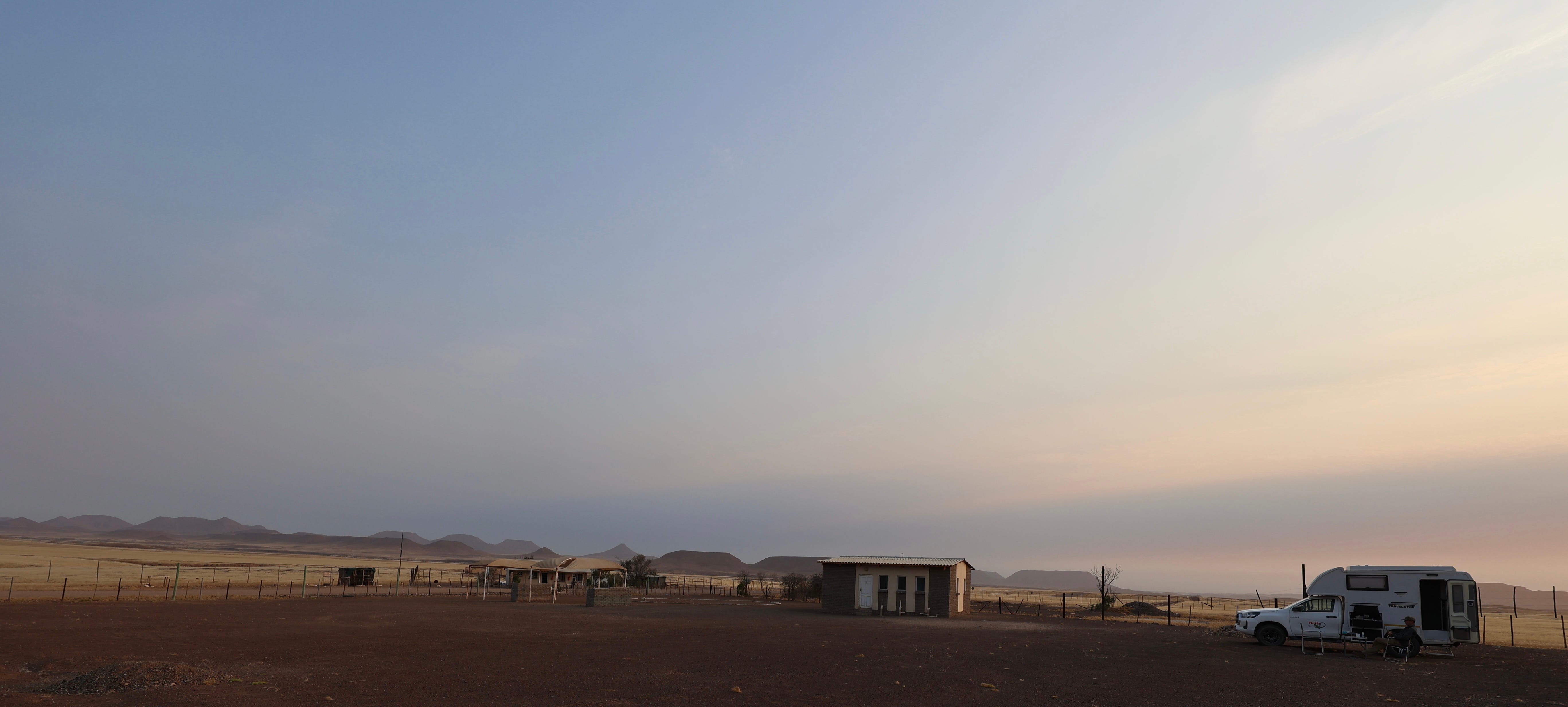
The last glow of sunshine turns the hills purple as we settle in for the night. A damp chill whips through camp on a coastal breeze, so we bundle up to make dinner then fall asleep early. In the morning, we arrive at the park entrance right as it opens. We fill out paperwork, but pay no fees since we are passing through the park. Much of the Skeleton Coast is closed to visitors, so we visit the southern end, where the road parallels the ocean for many miles.
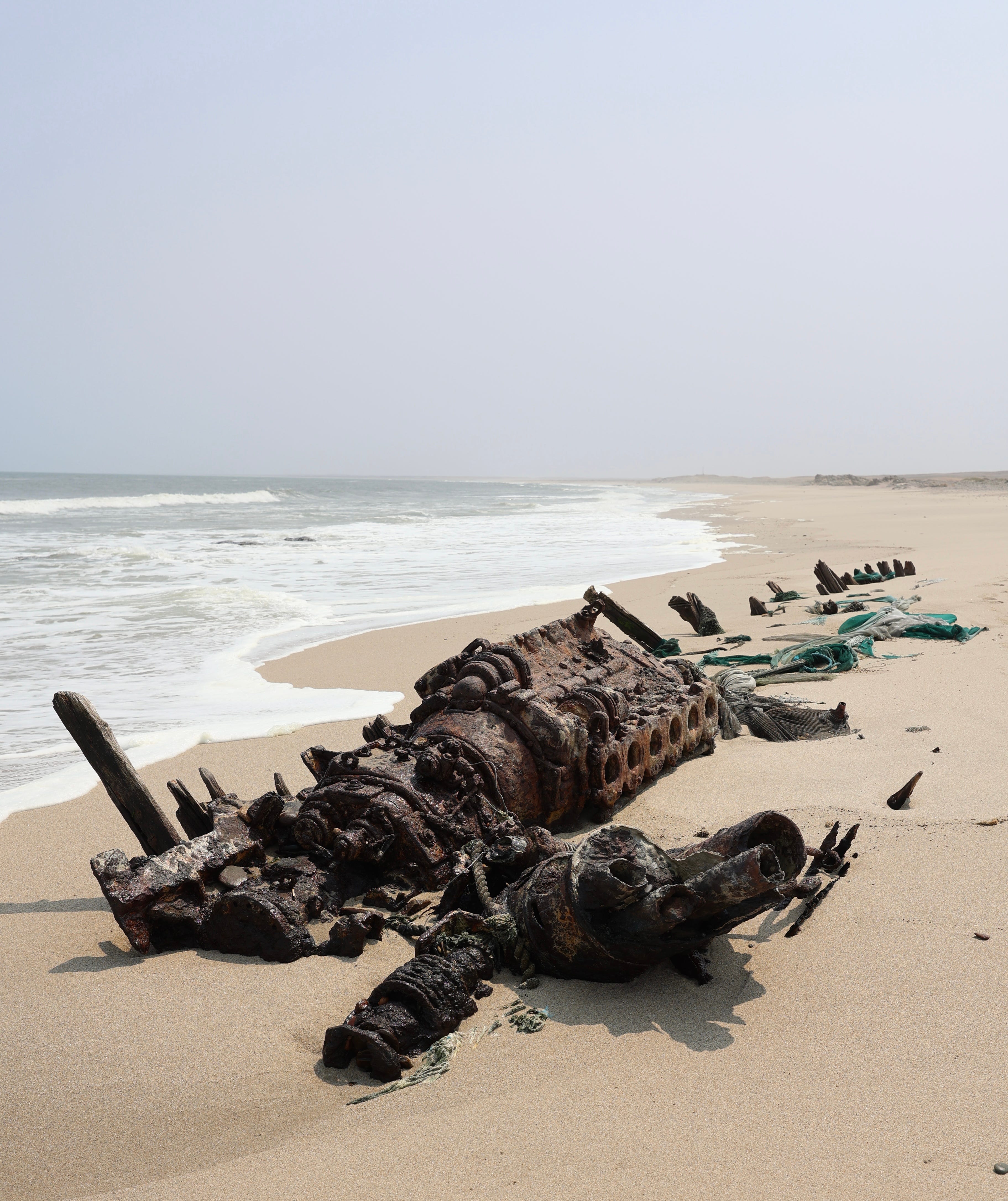
The pounding surf is a reminder of the wildness of this place. Occasionally, coastal lions are seen roaming the beaches here, but we never catch sight of them. We do spy one of the few remaining shipwrecks still visible on this shore, the South West Seal, a fishing boat that experienced an engine fire back in 1976. The skipper opted to beach the rig to put out the fire, the waves serving as a natural retardant. All eight crew members survived, rescued by another fishing vessel.
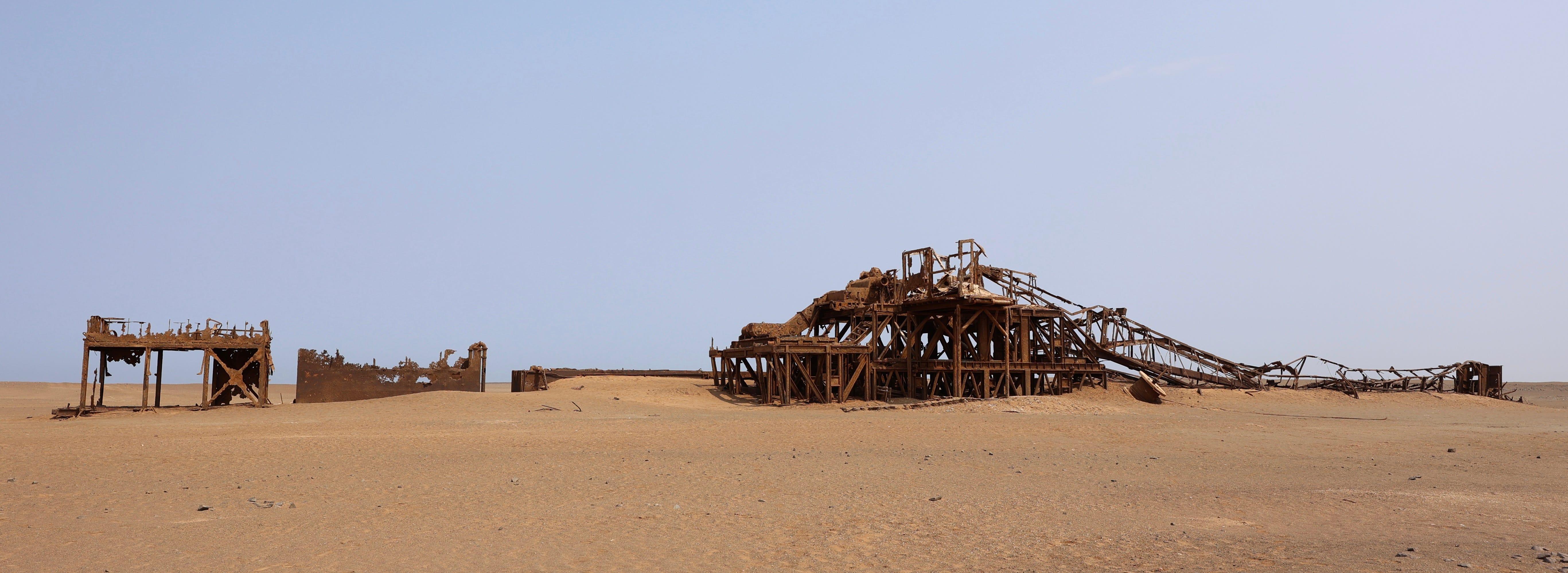
Further down the beach are the rusted remains of a drill rig, a business gone bust. The operator, who had first tried diamond mining, switched to oil exploration, then finally abandoned the site in the 1970s. White-breasted cormorants embraced it as a breeding ground, but when the derrick collapsed, they too flew the coop.
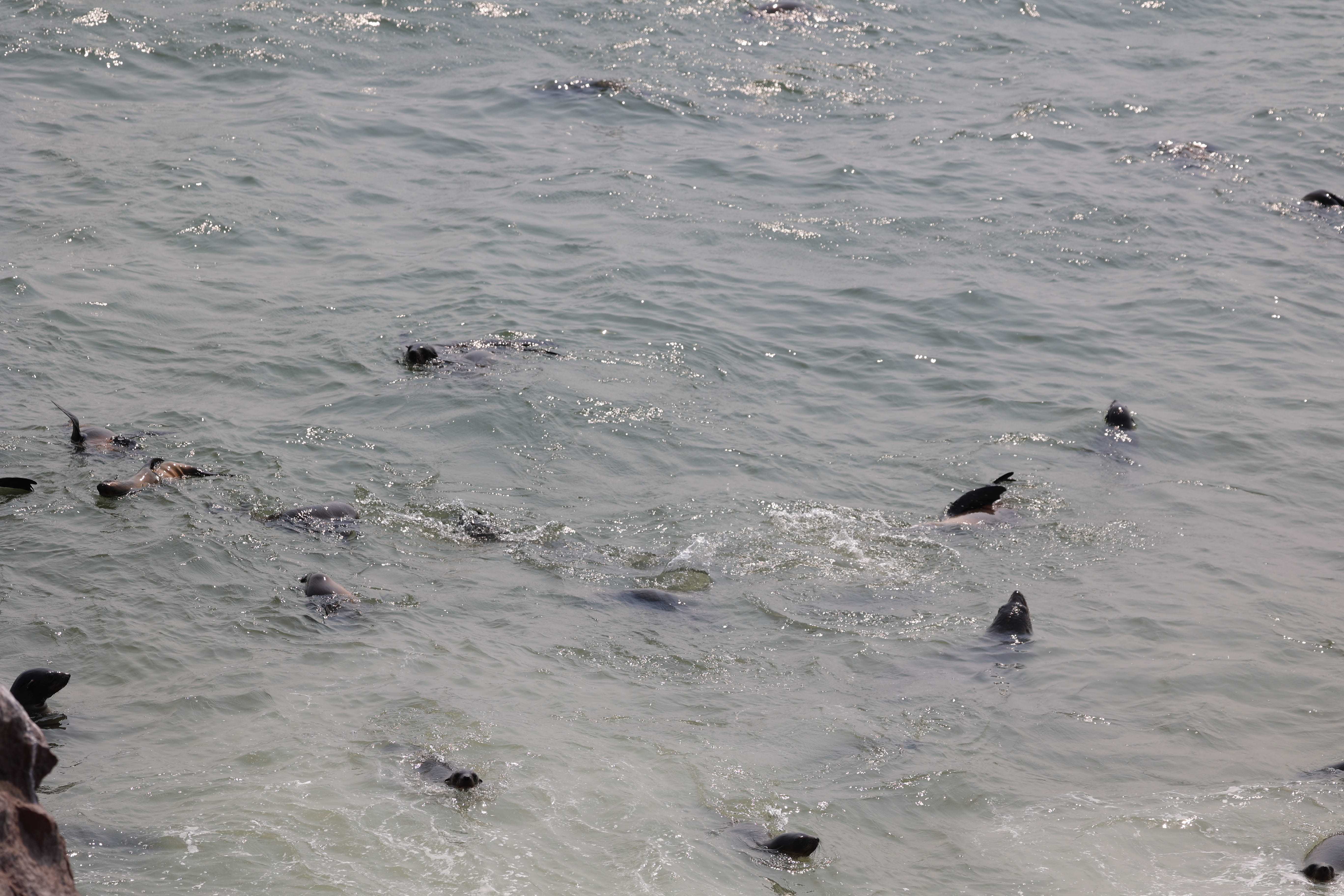
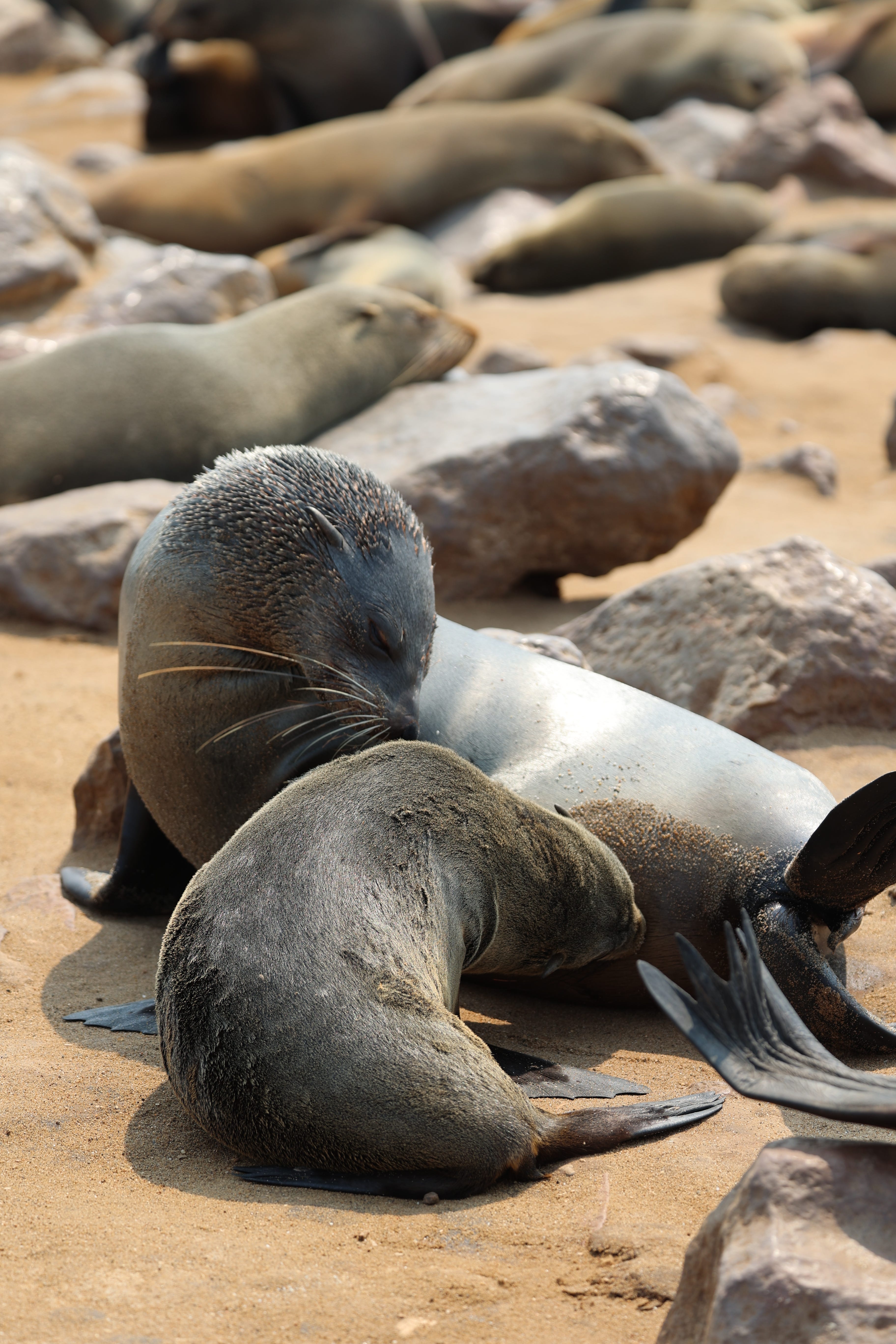
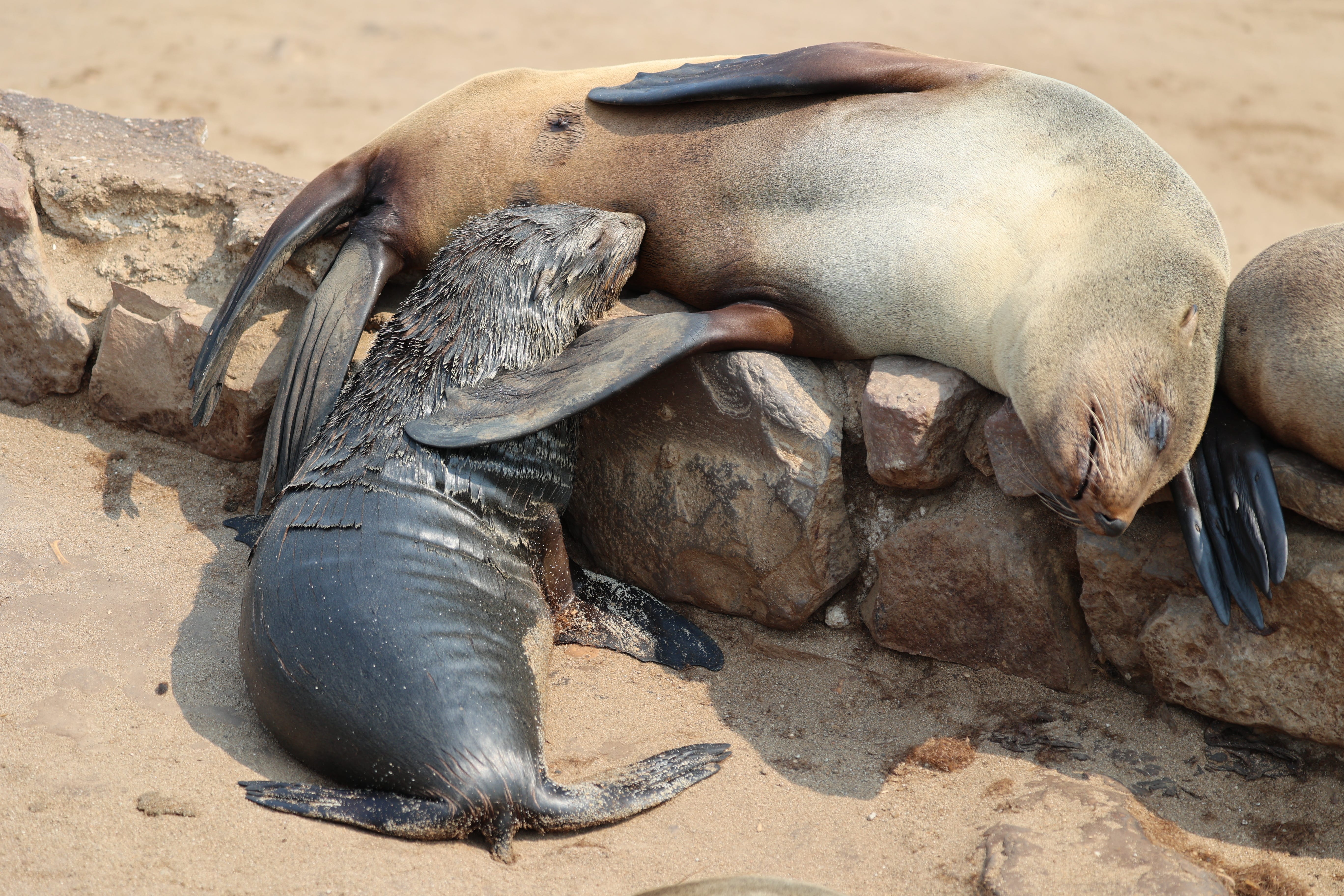
Anglers snag cob on fishing lines cast out from the sandy shore. The Benguela Current is right offshore so the ocean is rich with nutrients, drawing the likes of seals. Just to the south is the largest cape fur seal colony in the world, a cacophonous other worldly experience, well worth a visit. There’s an elevated walking platform that enables visitors to get close to the mothers and pups. Mamas only birth one pup per year, nursing them on the beach for nine months. By September, when we arrived, the babies were nearly weaned. After fishing, the mothers return to shore, where they use scent and a unique call to find their pup. It is a raucous reunion.
By the time we roll into the campground in Henties Bay, my hair is a salty mess. The campground is neatly raked and we have our own private bathroom that feels like pure luxury compared to the night before. Still, the Skeleton Coast stays in my memory like a crazy dream I can’t shake.
Love the experiences ! Wish I was there!
This is positively majestic